
 Franz Eliz
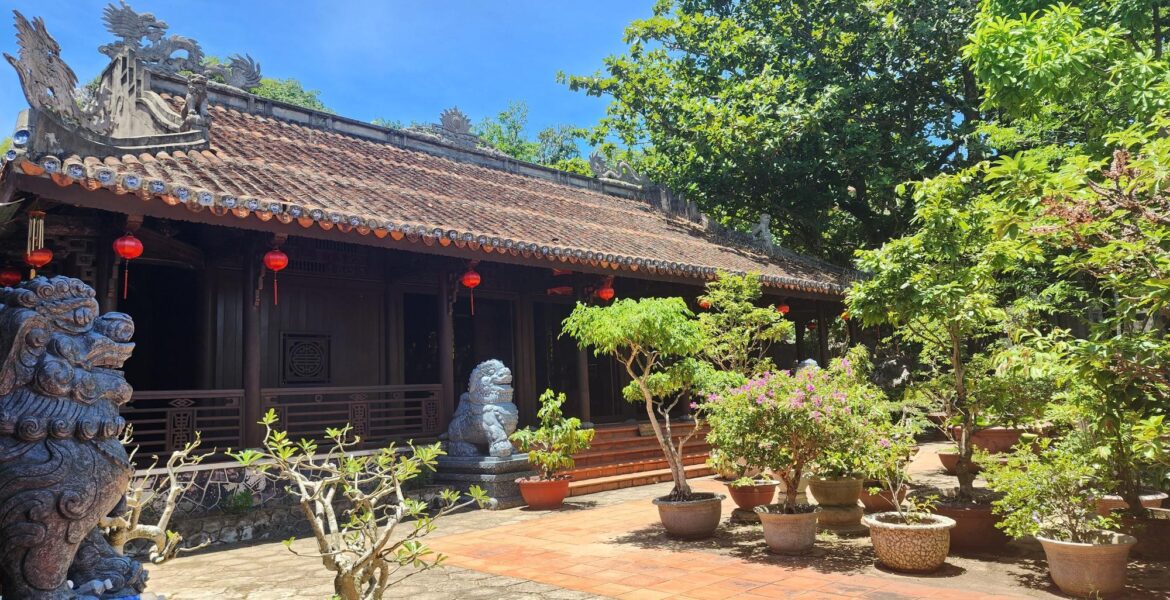
During my 2023 trip to Da Nang, I had Eviva Tour organise my itinerary, which included the Marble Mountains. Marble Mountains, one of Da Nang’s must-visit attractions, feature 5 limestone karsts, with each karst representing an element: metal, wood, fire, water, and earth. At Marble Mountains, visitors can explore beautiful limestone caves and pagodas, surrounded by nature.
I recommend taking a day trip to Marble Mountains during your visit to Da Nang. Due to its rich history and importance, Marble Mountains are significant to the people of Central Vietnam. Even influential local figures, including Vietnamese emperors and officials, have visited Marble Mountains.
I visited Marble Mountains during Da Nang’s dry season, sometime in June. It was hot and humid; even so, I had a lovely 3-hour tour. Keep reading to join me on my journey.
Exploring Marble Mountains With Eviva Tour
I had a local tour agency arrange most of my activities in Da Nang – thanks, Eviva Tour. For my trip to Marble Mountains, I had a driver and also a multilingual tour guide who speaks English, Vietnamese, Russian, and Mandarin. My tour guide was super friendly, and I enjoyed talking with her. A travel buddy of mine also tagged along.
Even though the journey to Marble Mountains from my accommodation was quick, I still managed to have a fun and insightful conversation with my tour guide. She didn’t hesitate to share her childhood stories – how she grew up during the Vietnam War – and discuss Da Nang’s history. Her stories were interesting, and despite having to reminisce about her past struggles, she maintained a cheerful attitude.
Stopping By a Stone Sculpture Facility
Before visiting Marble Mountains, my tour guide took me to a stone sculpture facility called Nhựt Mạnh. The store had all kinds of beautiful statues, including statues of Buddha and Guan Yin, as well as animal statues like toad, lion, dolphin, and dog statues. These statues came in many sizes, even as tall as 8 metres, like the Bodhisattva Avalokiteshvara.
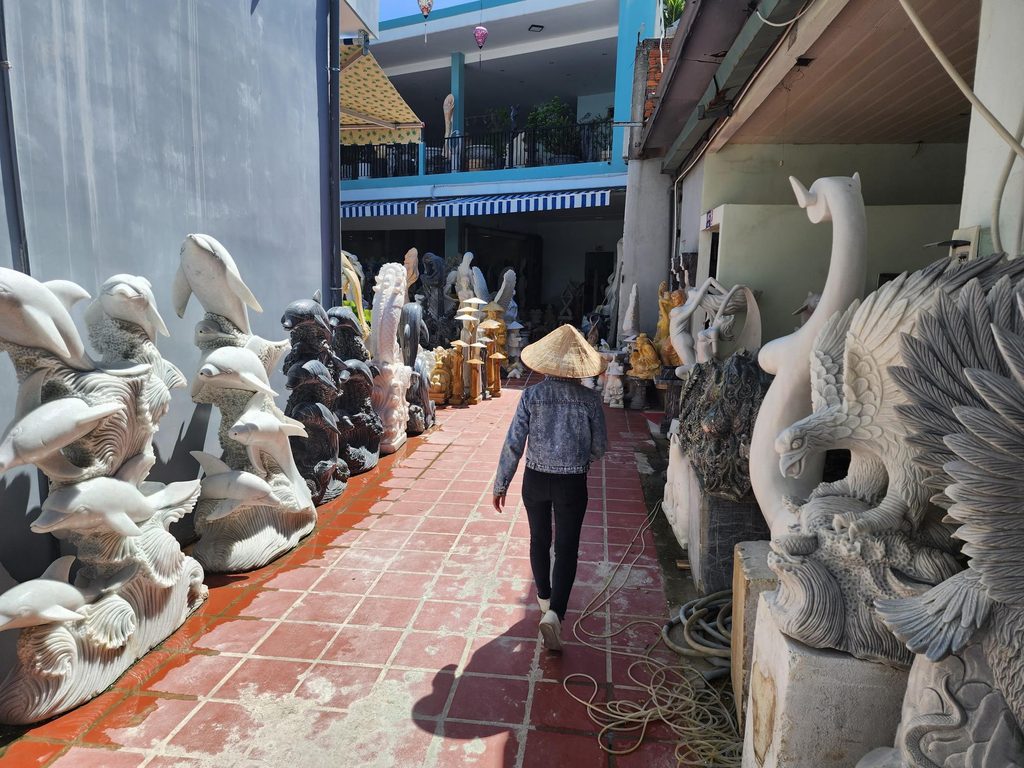
Also on display were stone furniture, vases, tombstones, garden decorations, fashion accessories, souvenirs, and more. I didn’t buy anything because the goods were expensive. It was nice looking at them, though. I saw a local sculptor at work; I couldn’t help but admire his work.
According to my tour guide, the sculpture business in Da Nang started booming when demand for sculptures increased. Many local and overseas tourists coming to Da Nang purchase small and big sculptures to take home.
Lining Up at the Ticket Counter
My travel buddy and I didn’t get our tickets in advance. Instead, our tour guide lined up to get them. Fortunately, the ticket counter wasn’t crowded, so buying tickets was a breeze.
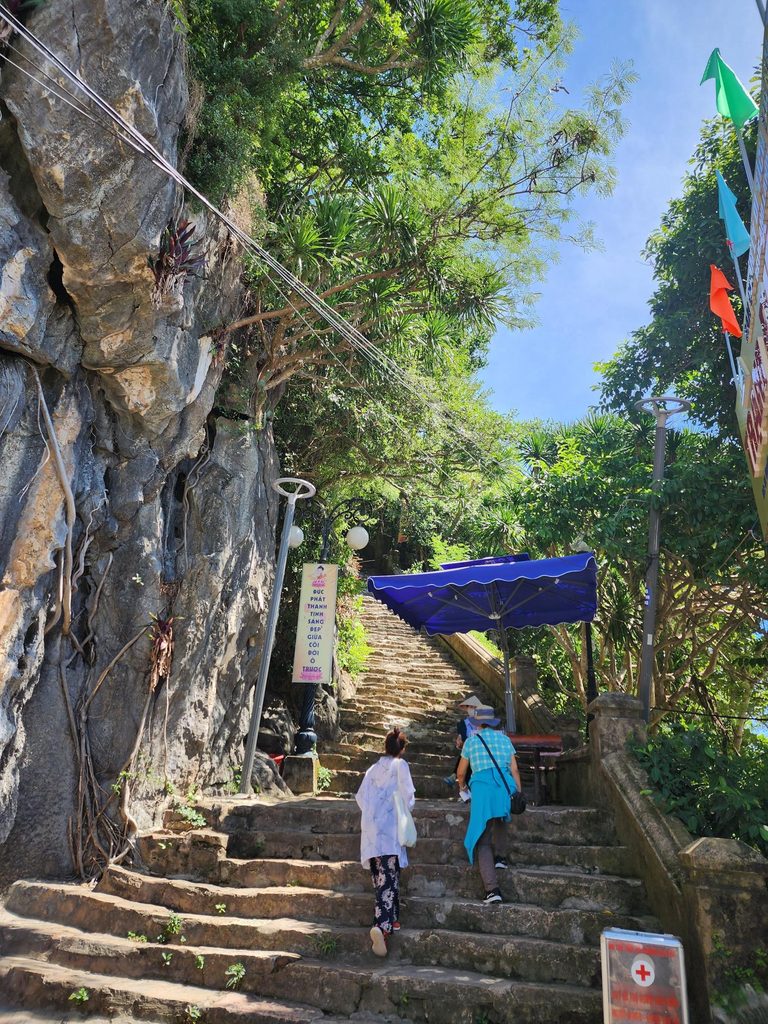
The entrance ticket was 40,000 VND per person. Visitors can also get the elevator ticket for 15,000 VND if they like. I didn’t buy the latter, so I walked up the stairs instead, which took me to my first stop. On the way, I stopped by a stall selling drinks, snacks, and bracelets.
Admiring Beautiful Statues, Temples, and Pagodas
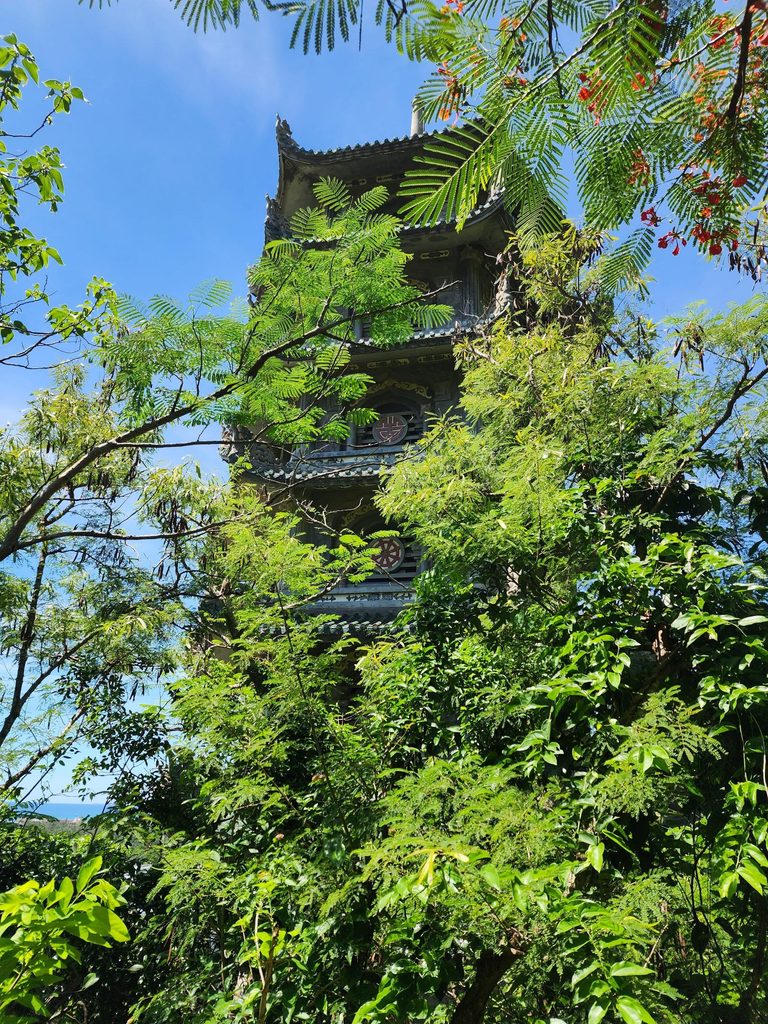
As I climbed up the spacious stone stairs – they weren’t steep, by the way – I saw beautiful statues (like a dragon statue), surrounded by lush greenery. While at the first pagoda, my tour guide explained the temples and pagodas at Marble Mountains. She discussed the history, architecture, and meaning of different symbols displayed.
For example, the first pagoda I visited had circular motifs – the Thọ (壽) symbols. The Thọ symbols represent a long, healthy, and peaceful life. In front of the symbols – one on the right and one on the left – were two muscular white-stone guardian statues.
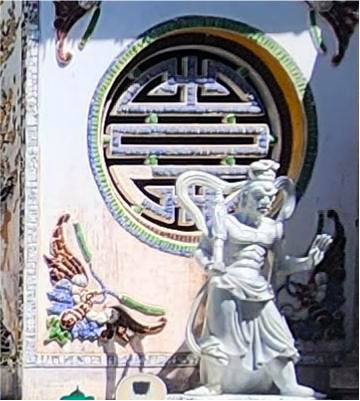
The pagoda, mostly painted in white, green, blue, red, and yellow, featured beautiful designs and a unique roof. It was indeed beautiful, and tourists flocked in to photograph it. There was a Buddha statue with colourful lights inside the pagoda. People entered to pray and pay their respects.
Traditionally, pagodas used materials like wood and bamboo. Over time, they began incorporating materials like stone, glass, and ceramic.
Exploring the Caves Where People and Animals Lived in Harmony
Marble Mountains is home to beautiful caves, where visitors will find Buddha statues and even trees. Unlike most caves – damp and dark – the caves at Marble Mountains have good lighting, so walking around is easy.
The caves can get pretty crowded, though. There were “rooms” in one of the caves I explored; a Buddha was lying down in one of the rooms. It required some climbing. I advise wearing comfortable shoes. The caves also had many stairs. Luckily, they weren’t slippery.
The Cham People Once Inhabited the Caves of Marble Mountains
The caves had interesting carvings that proved early human activity. According to my tour guide, the Cham people lived in these caves. The Cham people, a minority group in Vietnam, descended from the Champa civilisation. They were believers in Hindu-Buddhist traditions before Islam spread among them between the 16th and 17th centuries. Today, you can find Cham people in countries like Vietnam and Cambodia.
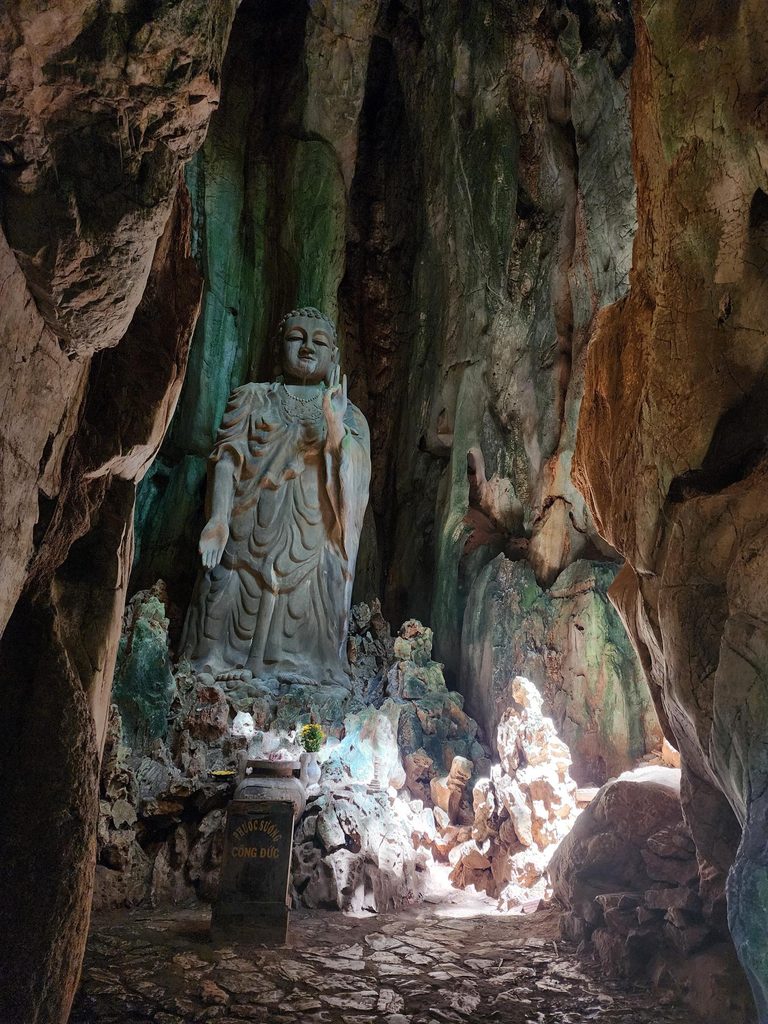
Both People and Animals Lived Together in the Caves
I could hear birds and bats in the caves. Even with animals hanging around, the caves were generally tidy and clean. I don’t remember seeing much guano. According to the guide, the bats don’t create trouble or bite people. Instead, they usually come at night to eat mosquitoes – bats and humans can coexist peacefully here.
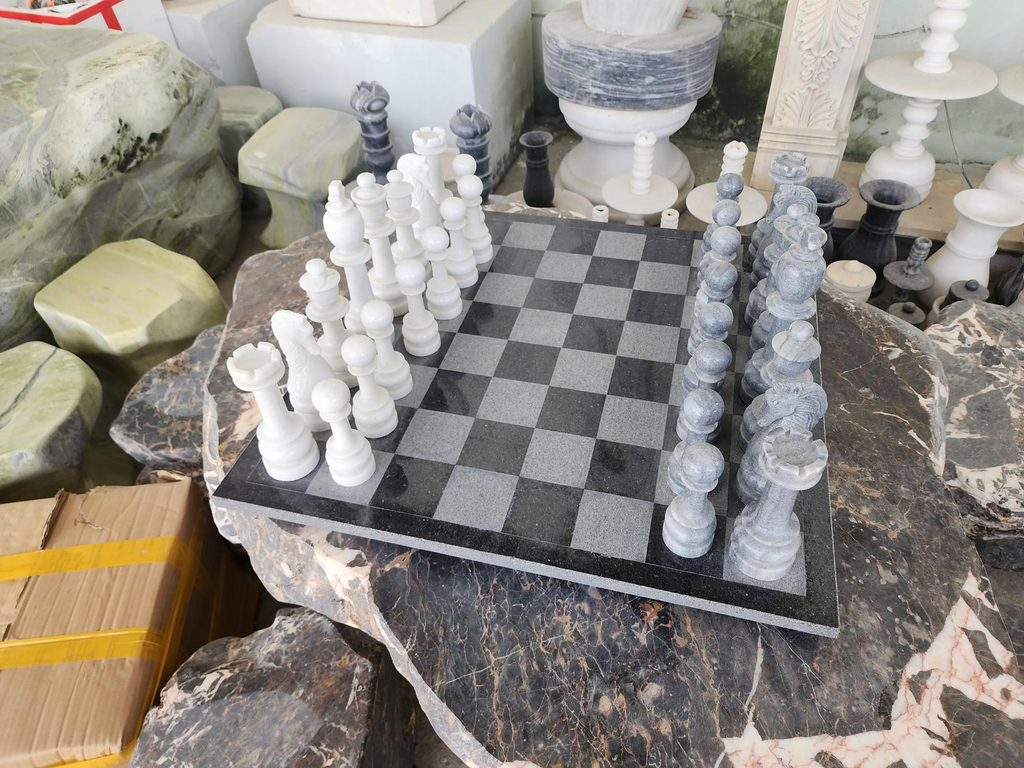
We visited Windy Cave; it’s called that because cold wind blows into it. How interesting. There were also donation boxes at the caves. As I explored further, I came across stone sculptures of two men playing chess – they represent the two men who came down from the heavens.
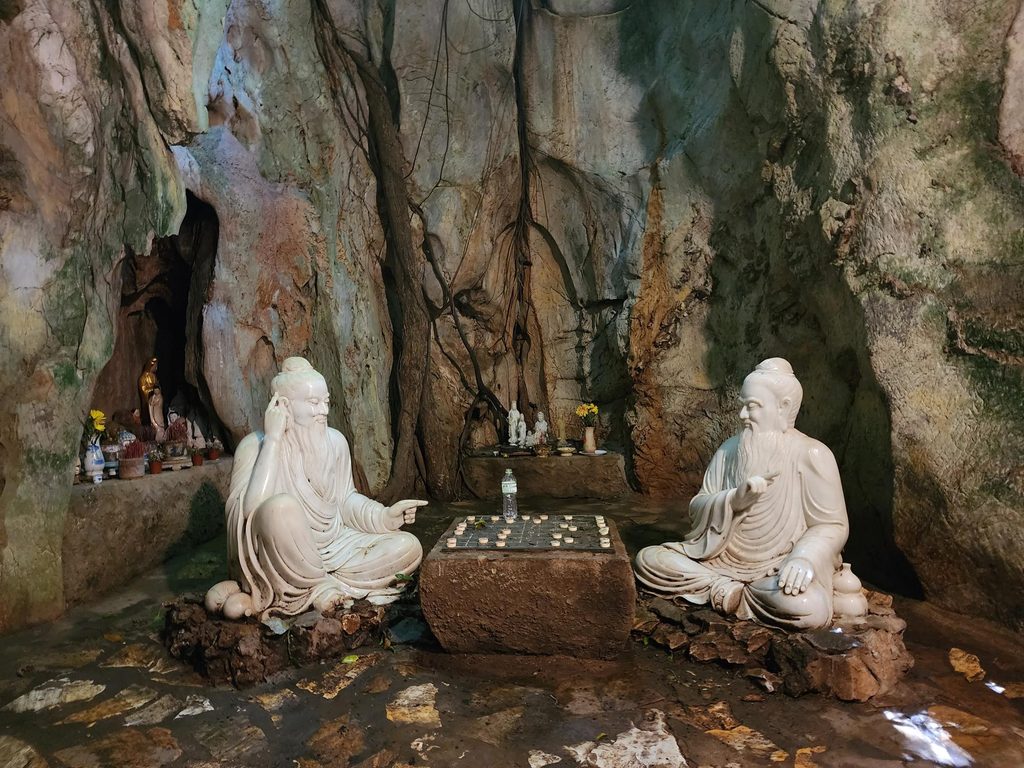
Walking Through the Cave’s Tight Spaces
My tour guide showed me another cave. This time, I entered without her. It’s a one-way journey; I would meet her on the other side.
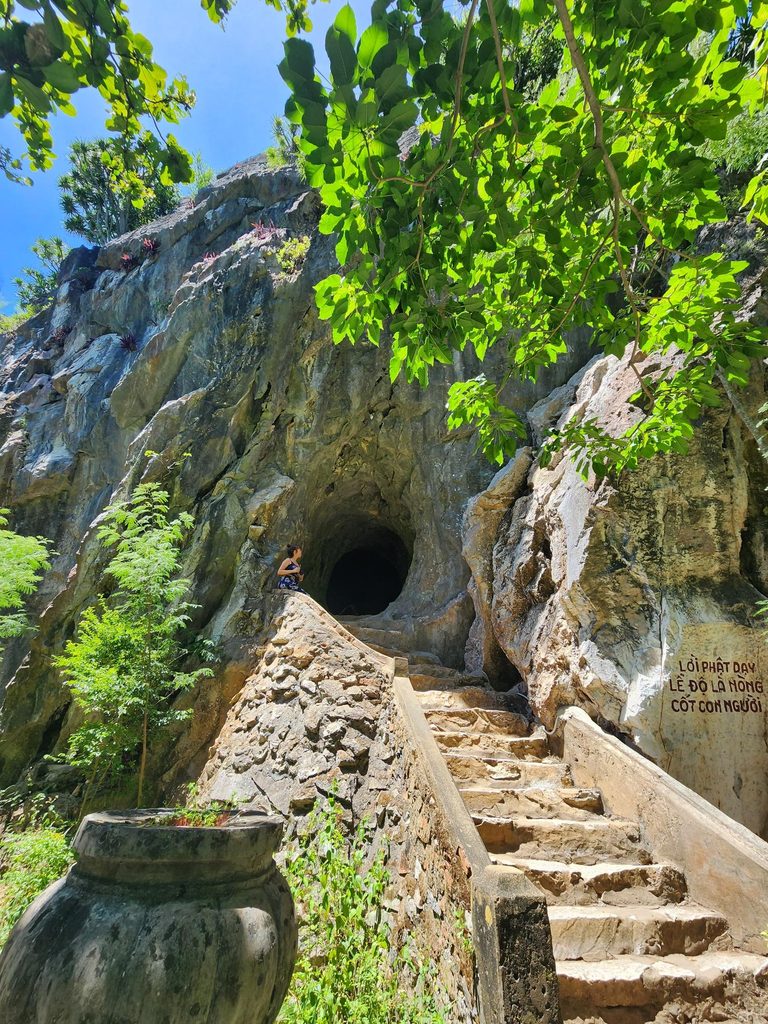
As I walked further into the cave, I came across a Buddha decorated with artificial lighting. In front of the Buddha were praying sticks and a donation box. Just behind the Buddha was an upward cave crevice that I had to climb.
After climbing through the cave crevice, I reached a cavern with natural lighting. From there, I had to go through another steep and narrow path – it was fun.
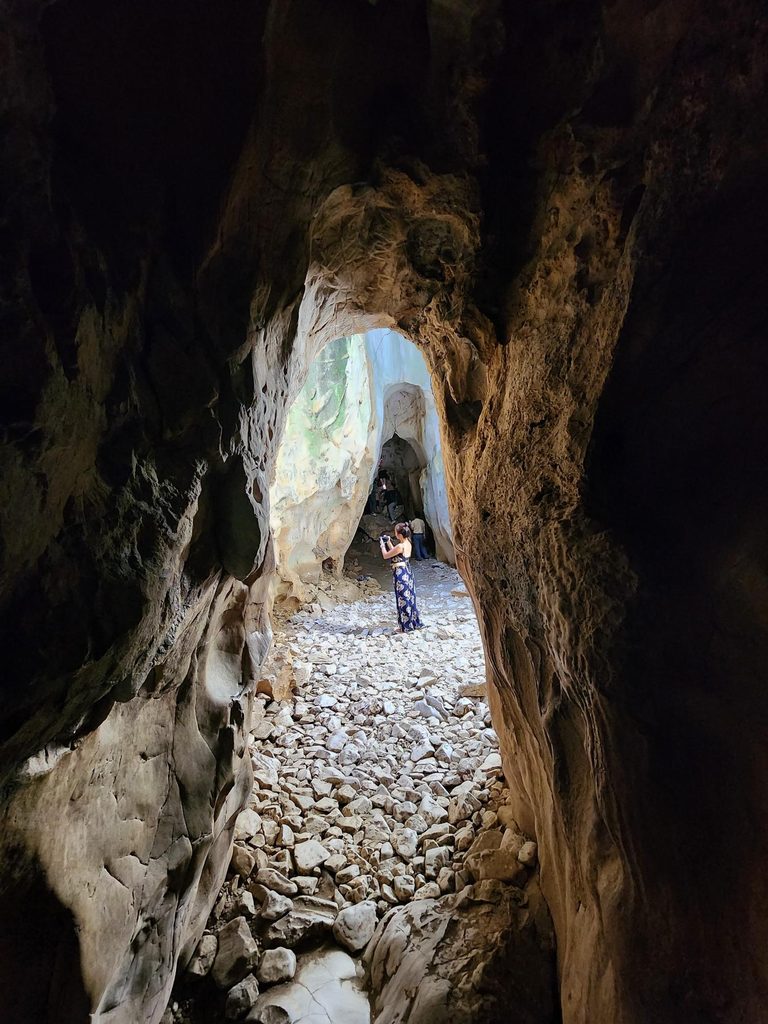
Eventually, I reached a rocky viewpoint. There, I took a better look at the surrounding area. Not long after, I reunited with my tour guide at the exit.
Getting Immersed In Stories of Fairy Visits and Heavenly Boobs
Our guide took us to a cave located on the left side of Trang Nghiem Tu Temple. According to local legend, fairies used to come down from the heavens and visit the cave. But eventually they left.
After the fairies left, one of them noticed something: she had forgotten something important in the cave. Our guide wanted us to guess what it was. We tried, but all of our answers were wrong. We gave up, and so she revealed the answer.
So what did the fairy accidentally leave? A pair of breasts. Now, I didn’t see that coming. Apparently, no tourist could guess it right. I mean, why am I not surprised? I did try to ask if the fairy forgot her heart. That was quite close, considering how close the heart is to the breast.
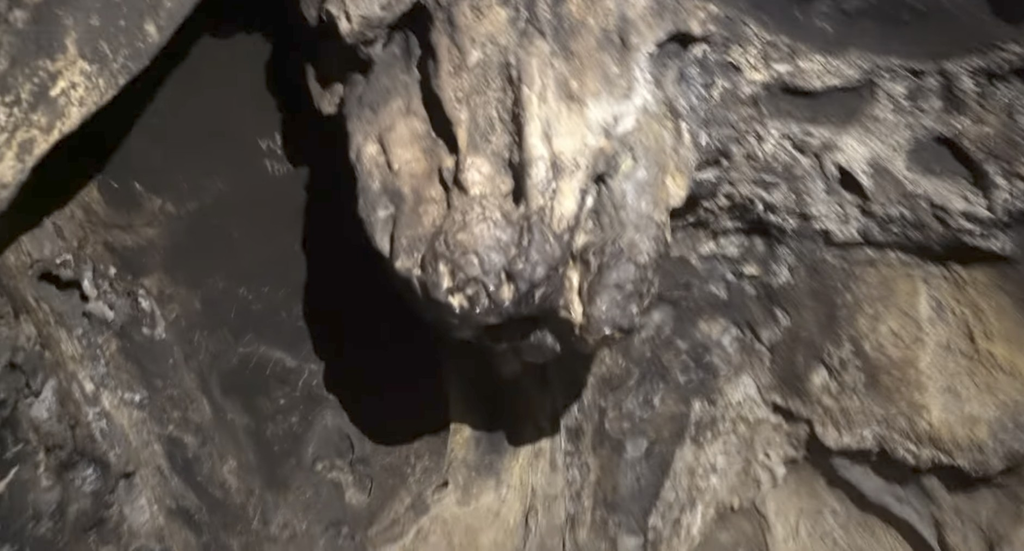
Heavenly Breasts With Heavenly Milk for Better Skin
What’s even more surprising was that the pair of “breasts” even had “milk” coming out of them. Our guide showed us the limestone formations that resembled a pair of breasts and the liquid dripping from them – that had to be the funniest thing I had heard and seen all day! My travel buddy tried touching the so-called breasts. He called them “heavenly boobs”.
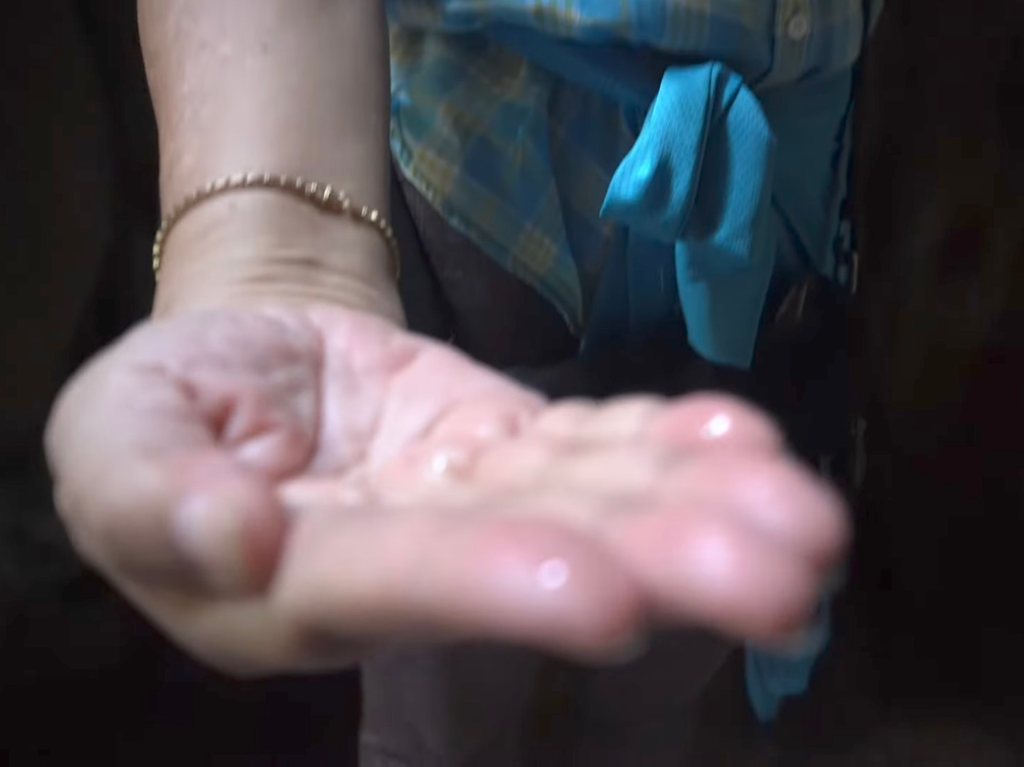
Many locals believe that the liquid is good for the skin.
Learning About Vietnam War History and Writing System
After visiting the heavenly boobs, my tour guide showed me a natural rock formation that resembled an ostrich. How interesting.
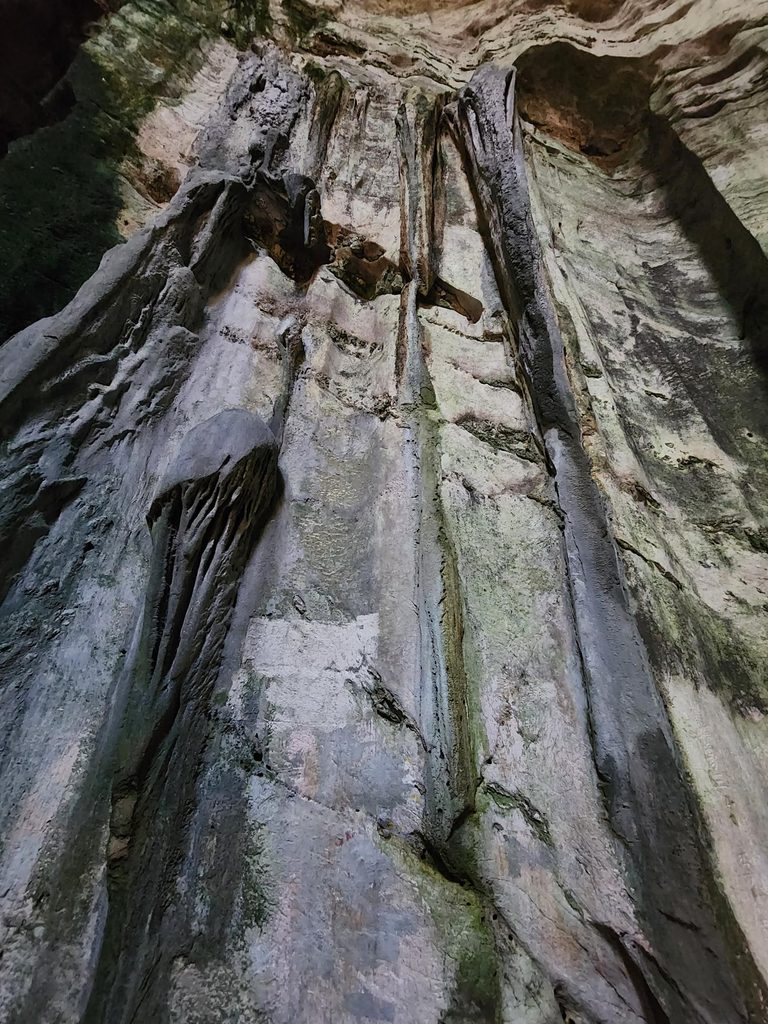
Then she took us to a spot where we could take dramatic photos of ourselves under the cave’s natural lighting. It looked like a scene from a movie where one was about to get abducted by aliens. It was pretty cool.
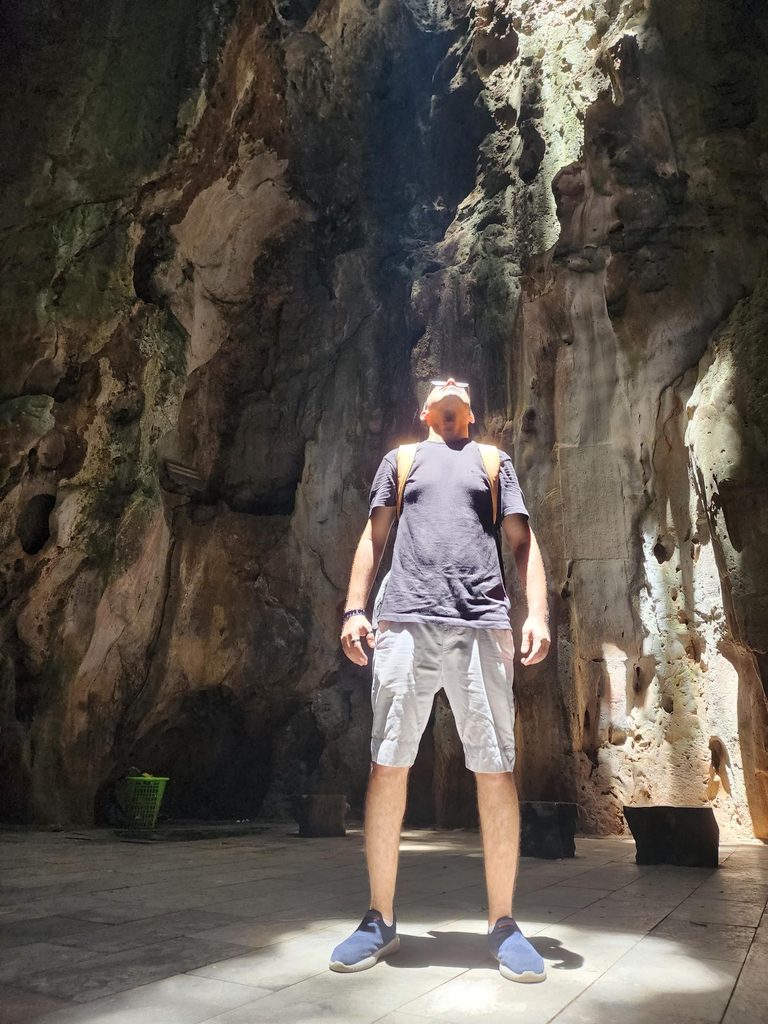
Just next to where we were was the Marble Mountain Air Facility (MMAF), owned by the Americans during the Vietnam War. Right underneath where we stood was the hiding place of Vietnam’s guerrilla fighters.
The Vietnamese fighters who fought against the Americans at the time managed to destroy 19 American helicopters. Upon discovering their hideout, the Americans went on and bombed the area, resulting in the soldiers fleeing. When the Americans arrived at the location, the place was already abandoned.
Trying a Stone Drum for the First Time
Our guide moved on to showing us the ‘Stone Drum’, a limestone formation that resembled a drum. She told us to bend our fingers and make a C-shape with our palms – as if we were hitting a drum – to create a loud sound. Well, I failed miserably. My travel buddy got it right on his second attempt. It sounded like a drum!
I thought the place smelled like sweat; my guide told me that the smell came from the rocks.
Then she pointed out the writings that the locals left behind – they carved out Chinese characters, probably with sharp blades or small stones. What’s with the Chinese characters, you might ask. You see, the Vietnamese once used Chinese characters in their writings.
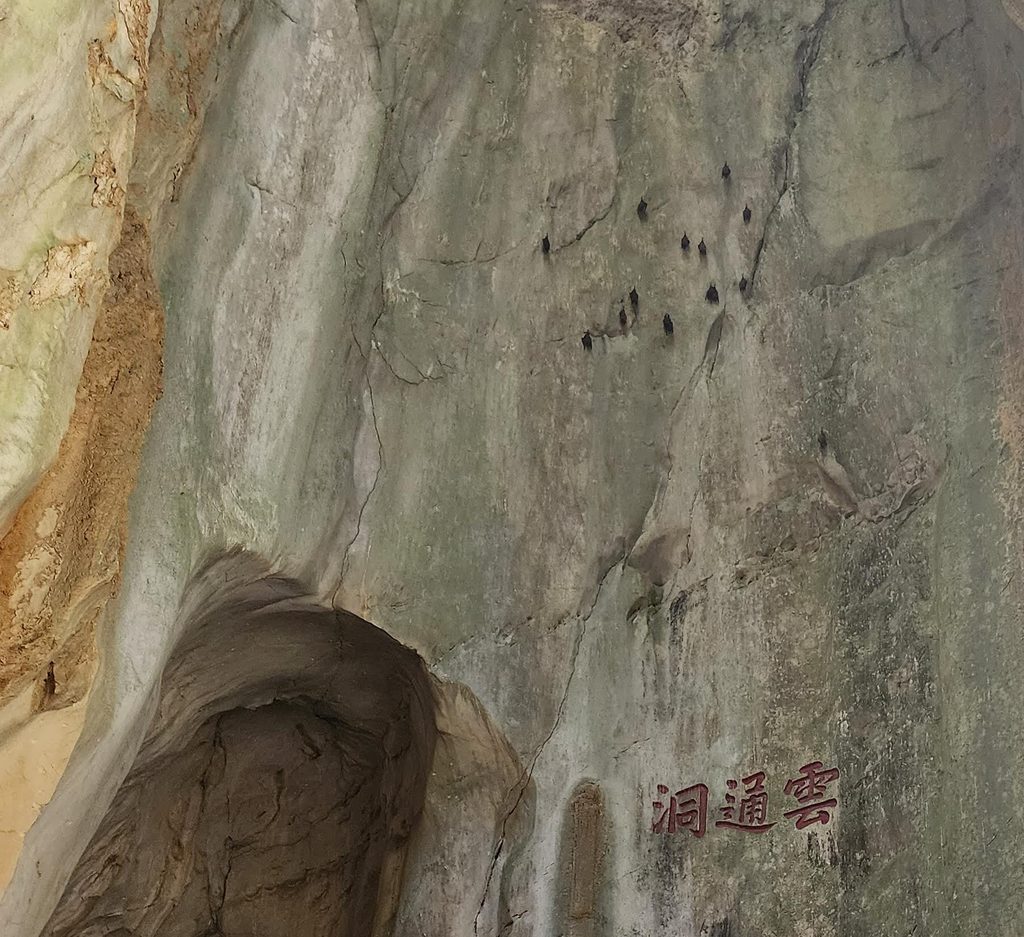
But they changed their writing system to the Vietnamese writing system (Chữ Quốc ngữ) after the arrival of French missionaries. Portuguese Jesuit Francisco de Pina introduced the Vietnamese writing system we see today. Currently, Vietnam has about 7 million Catholics.
Even if people may have scribbled down their names on limestone in the past, it doesn’t mean you can do the same. It’s considered vandalism today; hence, it’s forbidden.
Resting in a Beautiful Garden With Bamboo and Cherry Blossom Trees
After our trip to the caves, we went to a garden with beautiful flowers and statues. Our tour guide let us explore it on our own at our own pace. I walked along stone stairways surrounded by bamboo. This part of the garden was much cooler than the rest of the area.
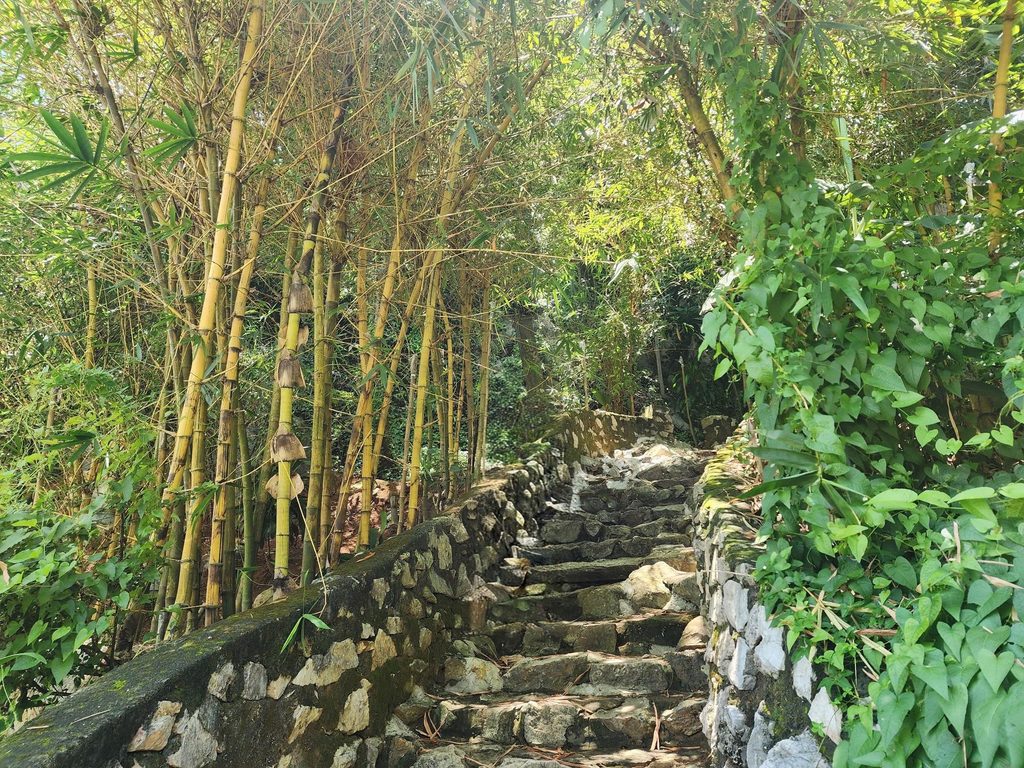
In the garden were stone tables and chairs; some were bamboo benches. I came across a tiny bamboo table and benches – how cute! Just above the furniture was a cherry blossom tree. There was also a lovely temple and a fat Buddha statue.
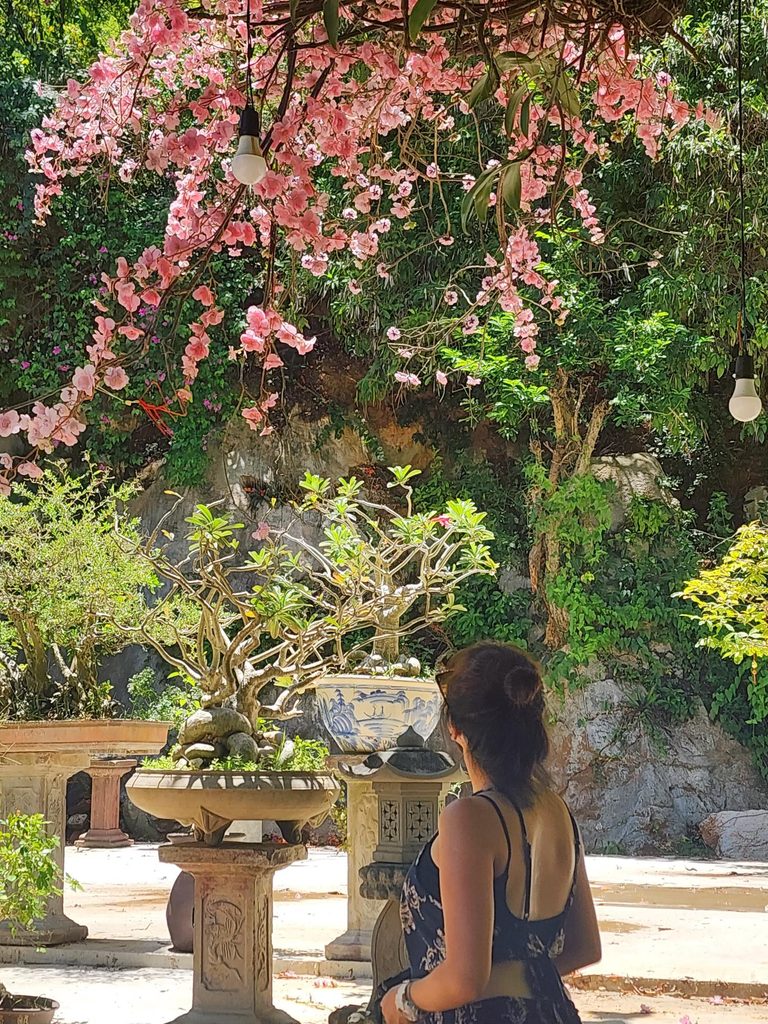
Since there were no other tourists around, my travel buddy and I had the place to ourselves. It was so quiet and peaceful. We hung out for about 20 minutes or so.
How Should I Dress at Marble Mountains?
Dress comfortably at Marble Mountains, no matter the weather. The dry season will bring hot, sunny days and high humidity, so consider wearing cotton. In the colder months, a warm jacket that you can layer with a shirt is ideal. But in any season, wear comfortable footwear.
You’ll be walking a lot, and some areas require a bit of climbing. The grounds can get slippery on rainy days, so wear footwear with a good grip.
There’s a dress code for entering religious buildings at Marble Mountains. It’s good practice to cover the knees and shoulders when entering temples and pagodas. I didn’t enter any religious building at Marble Mountains; I just walked around the garden area. But now that I think back about my trip, I think I could’ve dressed more modestly, as most of the caves I entered were cave temples, after all.
Before coming to Marble Mountains, I had no idea that the mountains had cave temples. I did come to the mountains with a white cardigan that covered my shoulders, which I removed later on when the weather got too hot. I guess I’ll travel with more T-shirts next time.
A Visit to Da Nang’s Iconic Dragon Bridge
The last activity was visiting Da Nang’s Dragon Bridge (Cầu Rồng). The gold dragon looked majestic, especially from below. I walked up the stairs to the bridge. Then, I took a moment to photograph the Dragon Bridge and its surrounding area. And then the tour finally ended.
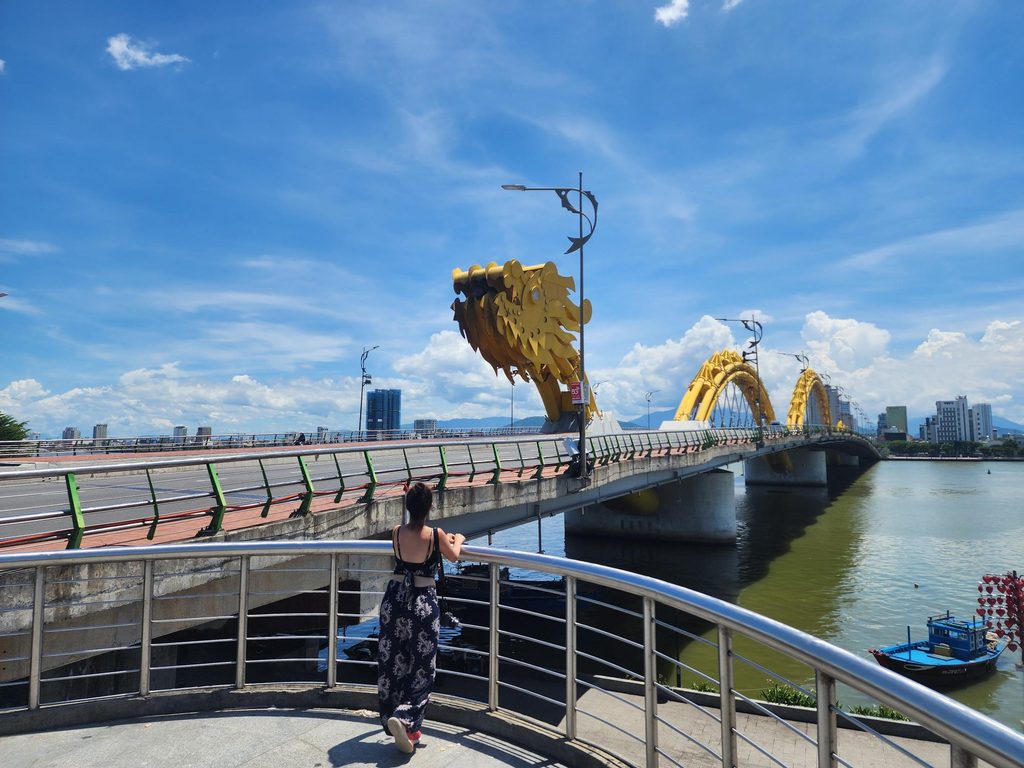
Coincidentally, my travel buddy and I were in Da Nang in the same week as the 2023 Da Nang International Fireworks Festival (DIFF). So we returned to the Dragon Bridge on June 17 to join the event. It was a contest between Australia and Italy. Each firework session took about 20 minutes. While both countries displayed stunning fireworks, I preferred Italy’s.
Team Italy got to the final round to face Team France. That year, Team France was the champion – they received a trophy and $20,000. Team Italy, on the other hand, won $10,000.
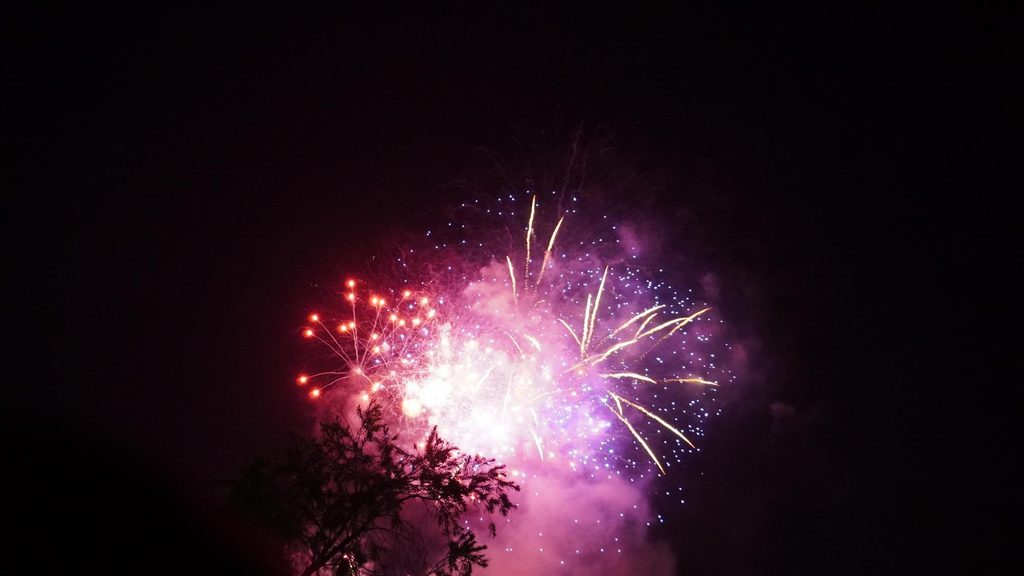
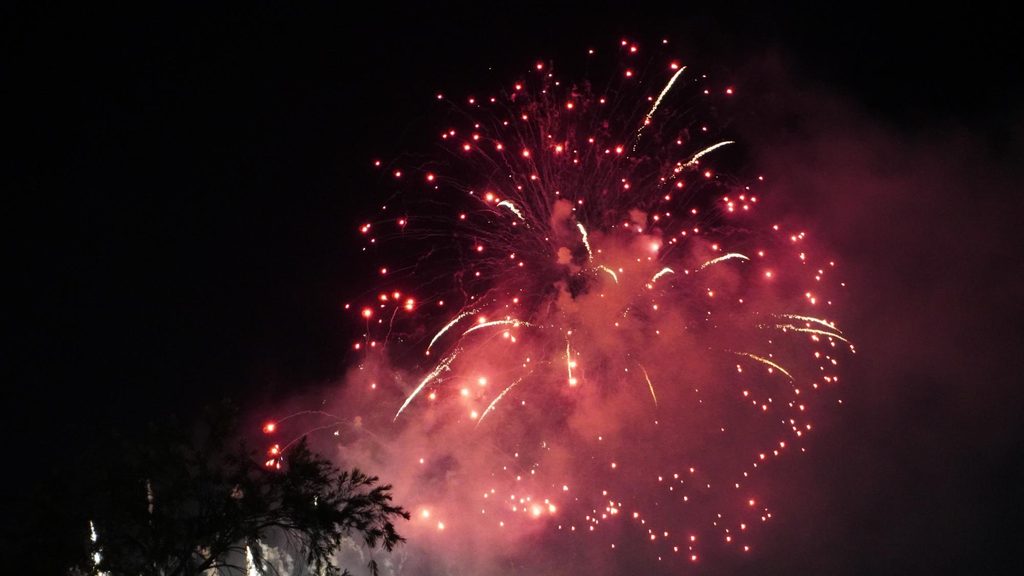
Other winners that year were Team Poland, who won the ‘Creativity Award’, and Team Finland, who won the ‘Audience Favourite Award’. Each team brought back $3,000.
Final Thoughts
I enjoyed Marble Mountains and highly recommend it to anyone who wants to learn more about Da Nang. Marble Mountains can give you an insight into Vietnam’s history and Da Nang’s role in the Vietnam War.
While February to April is generally the best time to visit Marble Mountains, the dry season from May to August is also excellent, although hot and humid. But it also means you don’t have to worry about heavy rain or walking on slippery ground.
After visiting Marble Mountains, don’t forget to visit the Dragon Bridge, which is Da Nang’s most iconic landmark.


