
 Franz Eliz
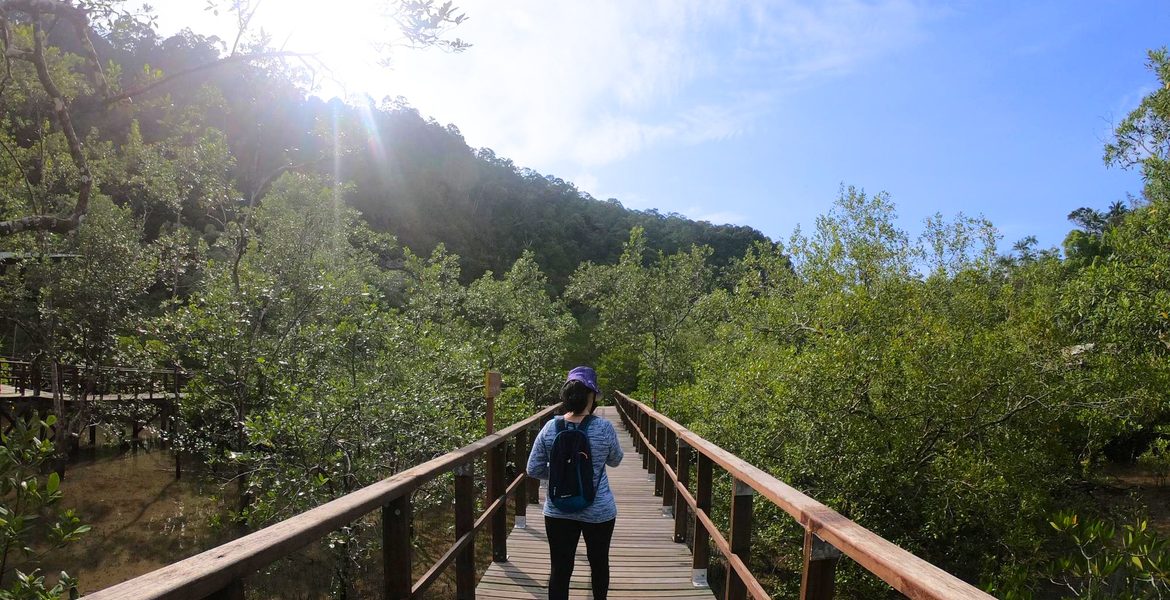
It has been a while since I visited Bako National Park. I visited the park for the first time in 2016, and the last time I was there, it was 2020. Even after having visited Bako National Park twice, I still look forward to visiting it again for the third time.
Located in Sarawak, Bako National Park is a must-visit destination in East Malaysia. The national park is accessible by boat. With various trails to choose from, visitors can hike through one of the world’s oldest rainforests and admire its diverse flora and fauna.
Bako National Park indeed has a lot to offer, which is why I highly recommend that people consider spending one night there. But day trips are also fun and educational, which is also what I did. Keep reading to explore more.
Yes, You Can Do Day Trips to Bako National Park!
In 2020, I did a day trip to Bako National Park. Since my sister was planning to go there, I thought of joining her. It was an opportunity I couldn’t miss.
We didn’t spend the night at the national park. There was no need for that. Spending a couple of hours at the national park would suffice. We started our trip early so that we’d have enough time to explore the park.
Take the Bako Bus From the Bus Stop Next to Kuching Open-Air Market
From Kuching, you can drive to Kampung Bako Jetty, preferably first thing in the morning. But if you’re not driving, there’s always the red bus to consider. It departs from the Kuching open-air market, which is in the city centre. The bus parks, arrives, and departs from the bus station near a mall called Electra House.
The bus fare from the city centre to Kampung Bako Jetty is RM1. From the boat jetty, you can take a boat to Bako National Park.
Before boarding the bus, find the sign that shows the bus route. Then ask the driver if the bus goes to Kampung Bako Jetty. If the bus hasn’t arrived, just wait a bit.
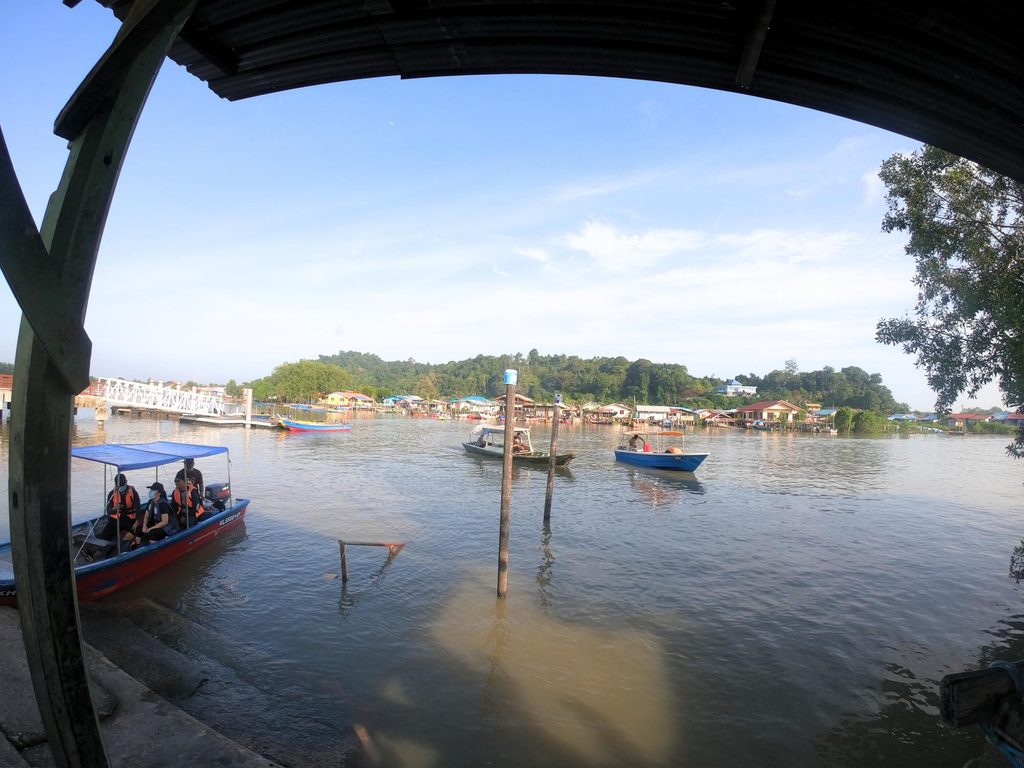
If you’re returning to Kuching from Kampung Bako Jetty by bus, you can get the bus near the small local restaurants nearby. If you don’t see the bus, that means it hasn’t arrived yet. The bus returns once every hour (from what I remember). I took the bus before and didn’t need to wait long for it to arrive.
Hire a Boat To Get to Bako National Park
My boat ticket was about RM30 per way. It took about 20 minutes to reach the national park. Note that an RM20 entrance fee applies to every tourist entering the national park. In short, expect to pay no more than RM100 for your entrance ticket and boat rides. Prices may change, so please visit https://bakonationalpark.my for more information.
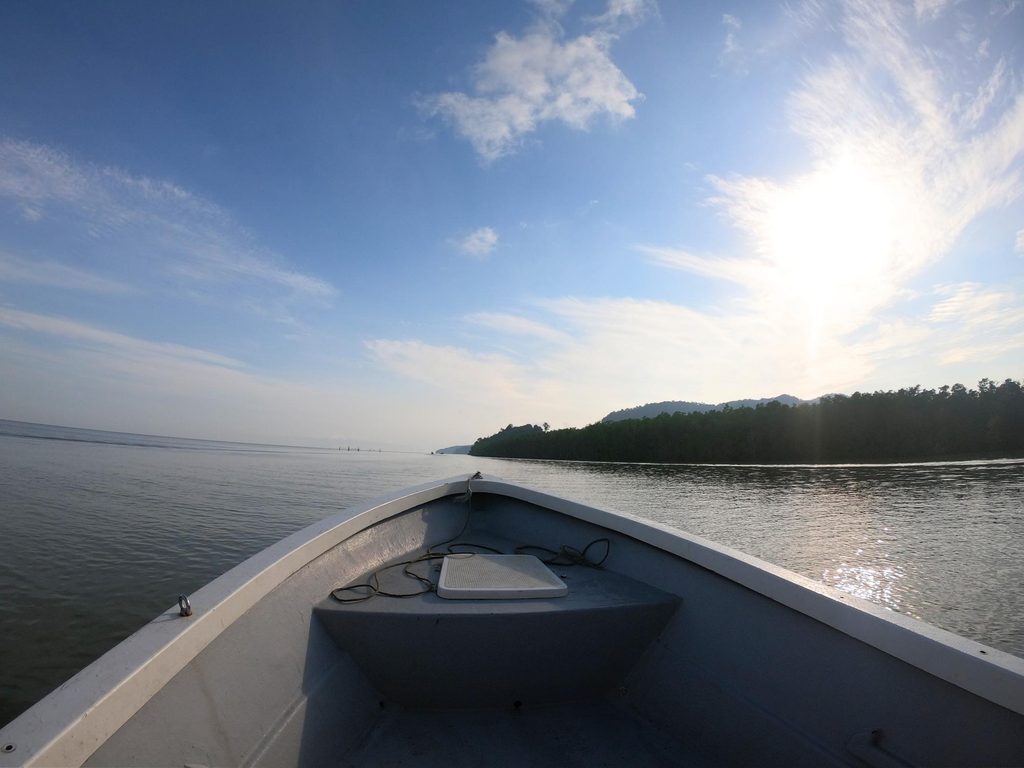
I’m not sure how much a private boat costs today, but my sister paid RM200 in 2020. There were only four of us at the time, meaning the price per person was RM50.
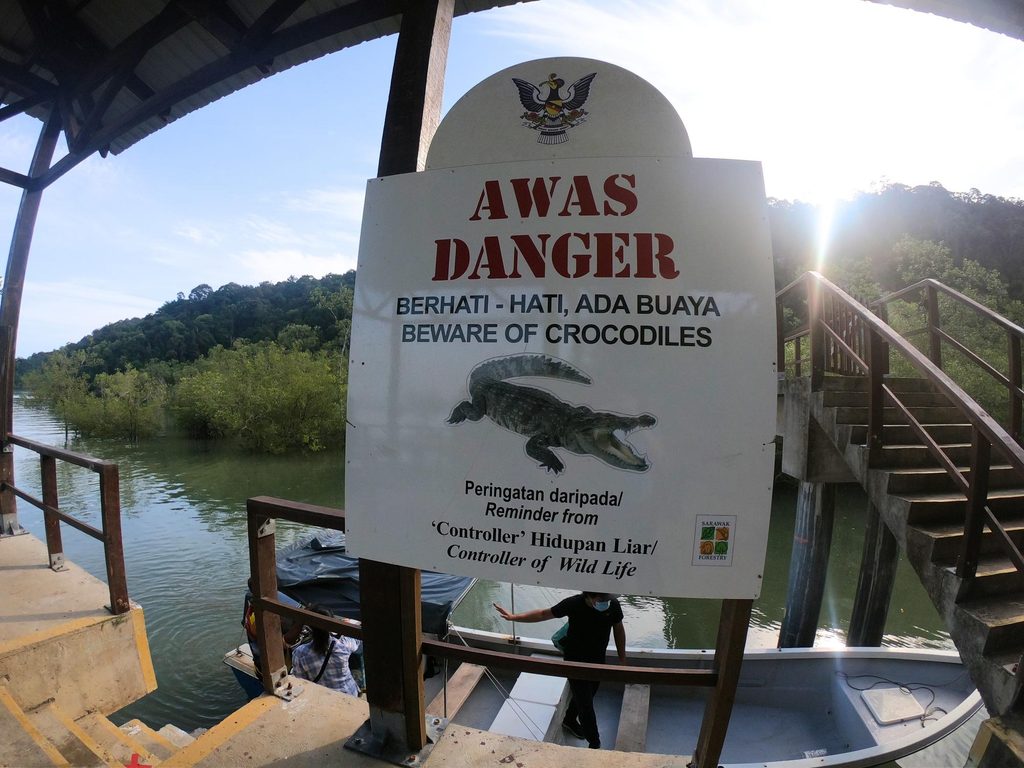
Upon arriving, I saw a ‘Beware of Crocodiles’ sign. I am not a fan of these reptiles, so it’s only wise to stay clear of the water. In Sarawak, it is common knowledge that if the water is brown, there’s likely a crocodile hiding underneath. Yikes! There was also a similar signboard near the park’s headquarters.
Know the Park’s Basic Rules
Once you’ve arrived at the national park, you will be welcomed by a sign with basic rules to follow. Here are the rules:
- Log in your visit in the park’s ‘Jungle Trekking Registration Book’ at the registration counter prior to trekking. Sign out before leaving.
- Pack enough food and drink for your trek. The weather is hot.
- Start your day early if you plan to do long trails that may take 3 hours.
- Consider weather conditions before trekking.
- Return to the park’s headquarters if you feel unwell. Don’t overstrain yourself.
- Do not attempt to trek if you’re physically unfit, or if you suffer from chronic diseases.
- Trek with a friend, if possible. Stay together if you’re in a group.
- Return to the park’s headquarters by 3 pm (for day trip visitors), or 5 pm (for overnight visitors).
- Exercise caution when around animals. All wildlife is unpredictable; they might attack (bite, sting, or scratch) when feeling threatened.
- Don’t feed the wild animals. Keep your distance.
Pick the Trails You Want To Do
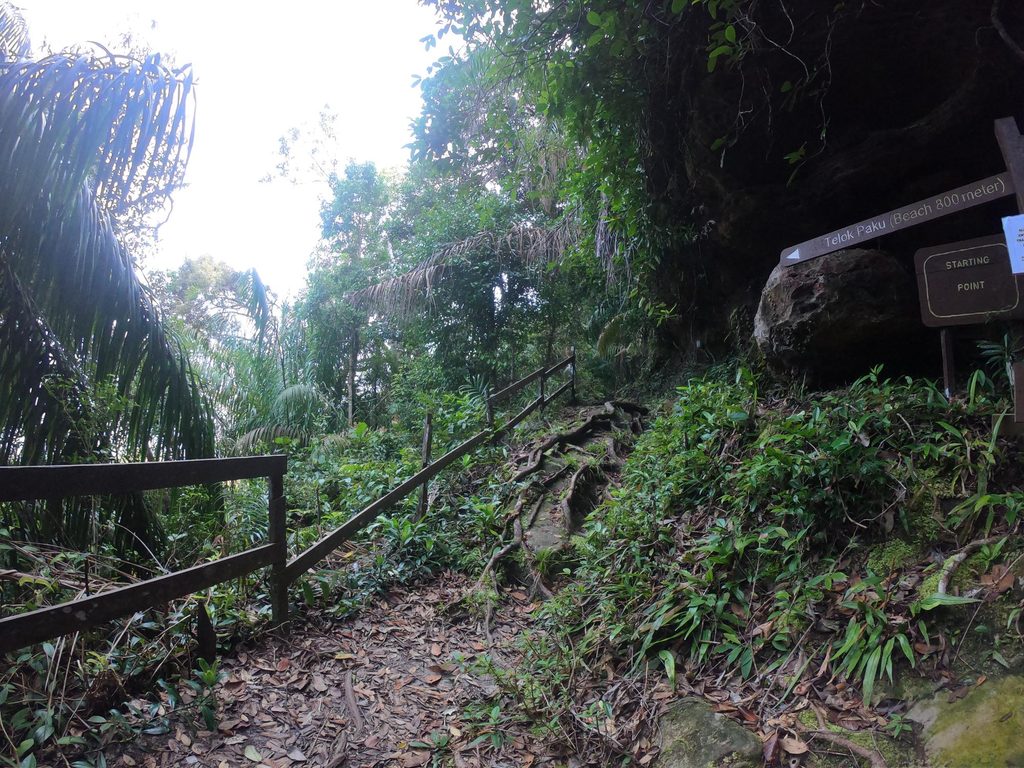
Near the reception or headquarters, you will see a wooden sign listing the park’s different trails. Take a look at them and observe the one-way distance of each trail to help you decide which trail to do.
The trails (and their colour codes) are as follows:
- Jalan Lintang (red): 5.8 km (3 ½ hours)
- Telok Paku (white): 1.5 km (1 hour)
- Telok Pandan Besar (yellow): 1.9 km (1 hour)
- Telok Pandan Kecil (yellow): 2.6 km (1 ½ hours)
- Telok Tajor (white and red): 3.5 km (2 ½ hours)
- Tanjung Rhu (yellow and red): 4.2 km (2 ½ hours)
- Tanjung Sapi (red and white): 700 m (30 minutes)
- Ulu Assam (red and blue): 1.3 km (1 ¼ hours)
- Telok Delima (white and blue): 1 km (45 minutes)
Since you will only be doing a day trip, planning your route is paramount. Remember, you’ll need to get back to the headquarters by 3 pm. Note: There’s a public toilet at headquarters if you need it.
Explore Bako National Park’s Diverse Flora and Fauna
Bako National Park is home to a wide range of wildlife. The park has been protected since 1957 (the year Malaya achieved its independence), and animals at the park feel safe, especially from illegal hunting. But due to this peace, they may also be less wary of humans. It’s best to stay as quiet as possible in the jungle.
The best times to see the park’s jungle residents are before dawn or after dusk. I did a night walk with my friends back in 2016 and found small frogs and scorpions.
Other animals found at Bako National Park are snakes, wild boars, monkeys, otters – the Oriental Small-Clawed Otter and the Hairy-Nosed Otter – plantain squirrels, common water monitors, mouse-deer, flying lemurs, slow loris, pangolins, skinks (I think I’ve seen them), various bird species, and more. There are also many insects around. If you walk around the mangrove, you might see mudskippers and crabs.
There Are Venomous Snakes Near the Park’s Headquarters
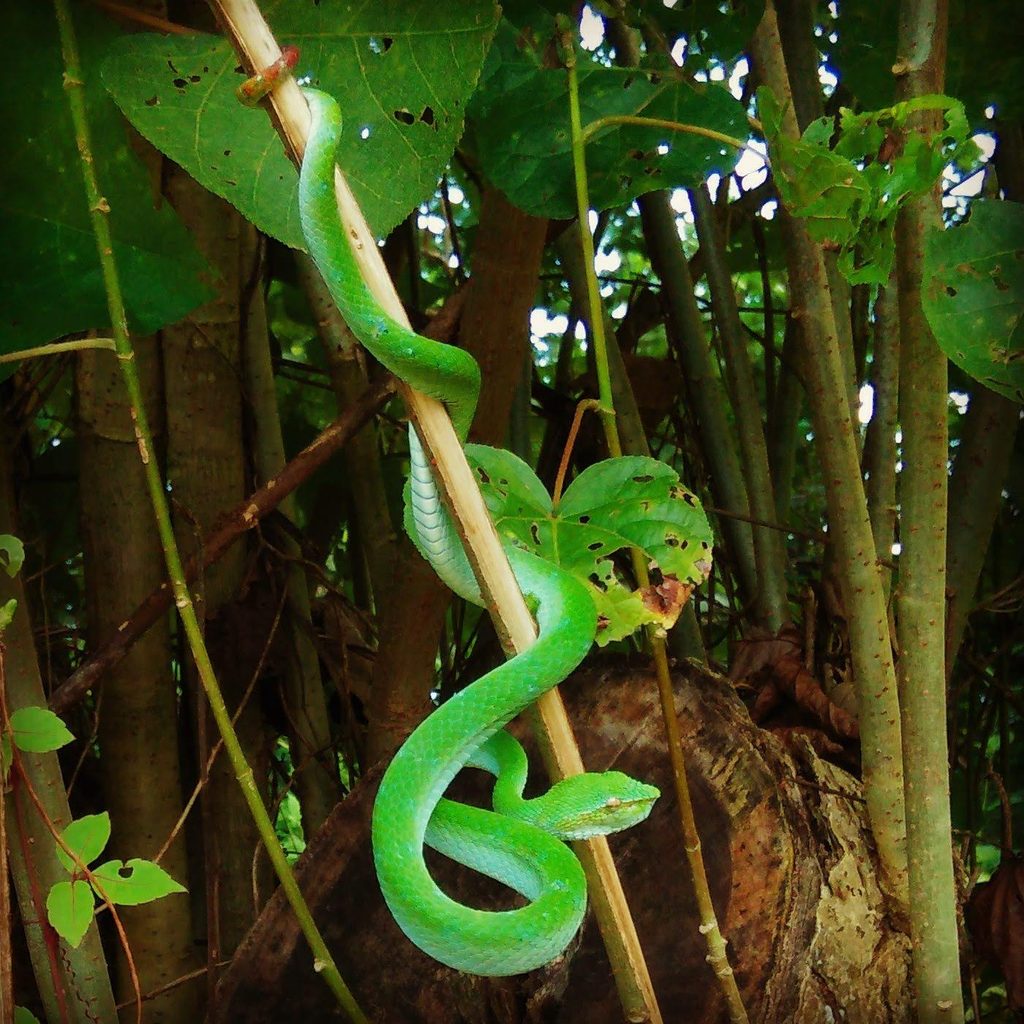
I saw the Bornean Keeled Pit Viper, also known as a green viper, sometime before noon at Bako National Park in 2016. It shocked me to the bone because I believe that was my first time seeing a viper. I was a little too close to it when it was sleeping. Luckily, my friends pointed it out, which made me notice the viper curling around a branch. I saw the viper near the park’s headquarters. Wow!
My friend Raul found a small snake slithering near the headquarters. It wasn’t venomous.
Note that in the two instances where I encountered snakes, I encountered them at the headquarters. Apparently, the green viper is always in the area. So you better stay alert in case it’s right next to you. The Tropidolaemus wagleri, more commonly known as Wagler’s pit viper, is often seen near the headquarters as well.
Other venomous snakes at Bako National Park are Boiga dendrophila, also known as the mangrove snake or the gold-ringed cat snake, and Ahaetulla prasina, also called the Oriental whip snake.
You Can See Various Monkeys at Bako National Park
In 2016, I came across naughty macaques. They were very curious, and some were a little aggressive. Luckily, the ones I encountered in 2020 were nicer.
As I walked through the jungle, I heard rustling sounds from the trees. I walked past a tourist and her guide. I overheard their conversation. According to the guide, the proboscis monkeys were right above them, in the trees. I could hear the monkeys, too. But I couldn’t see them.
Fortunately, in 2020, I encountered proboscis monkeys again. And this time, I saw them clearly on the tree near the park’s headquarters.
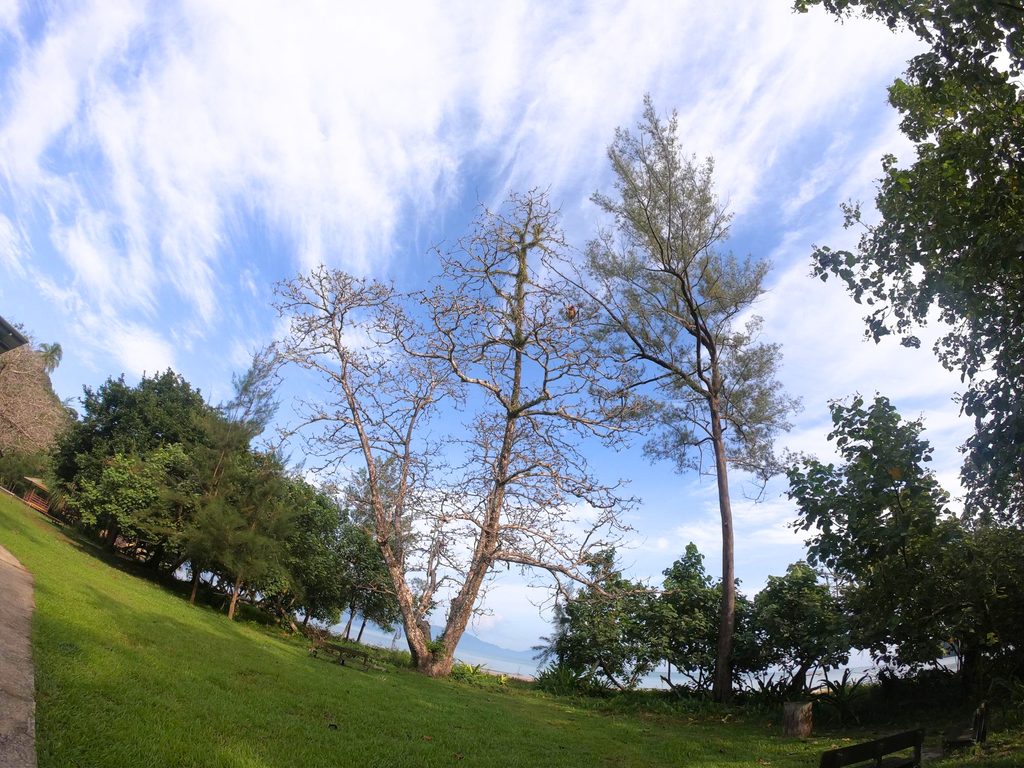
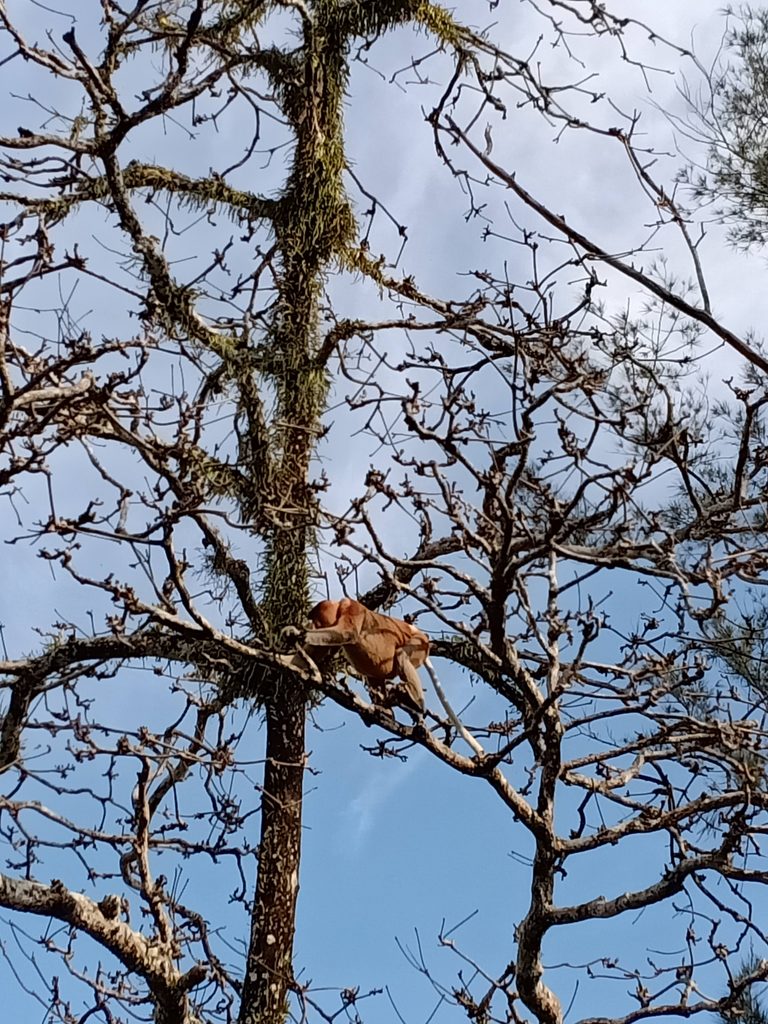
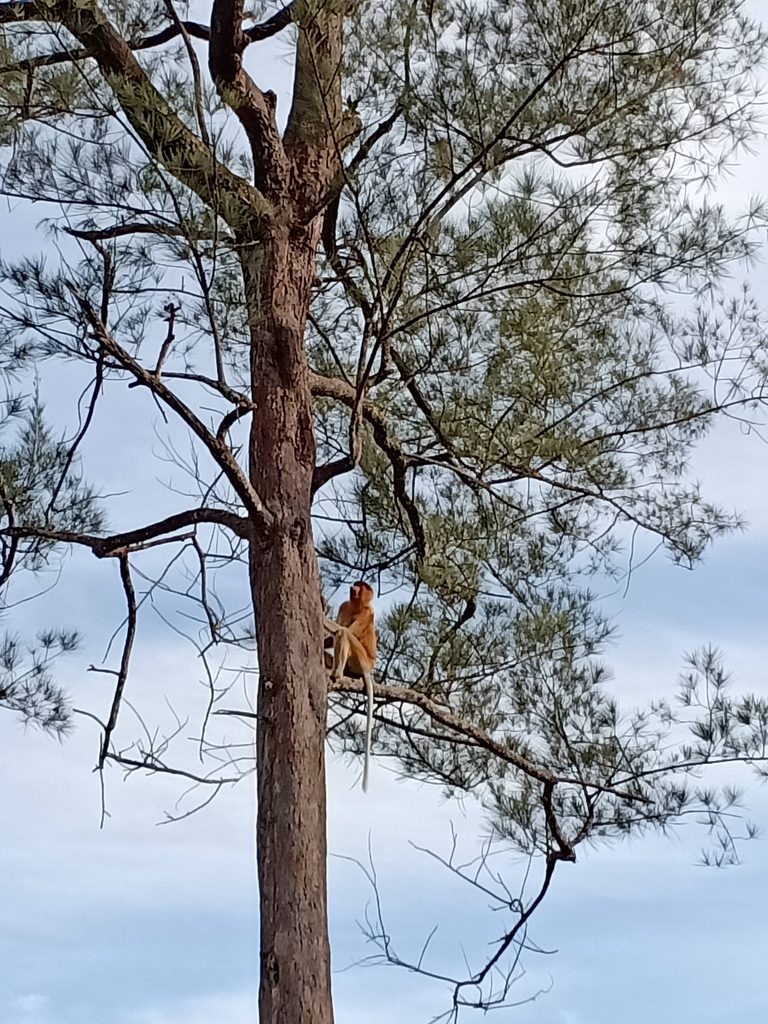
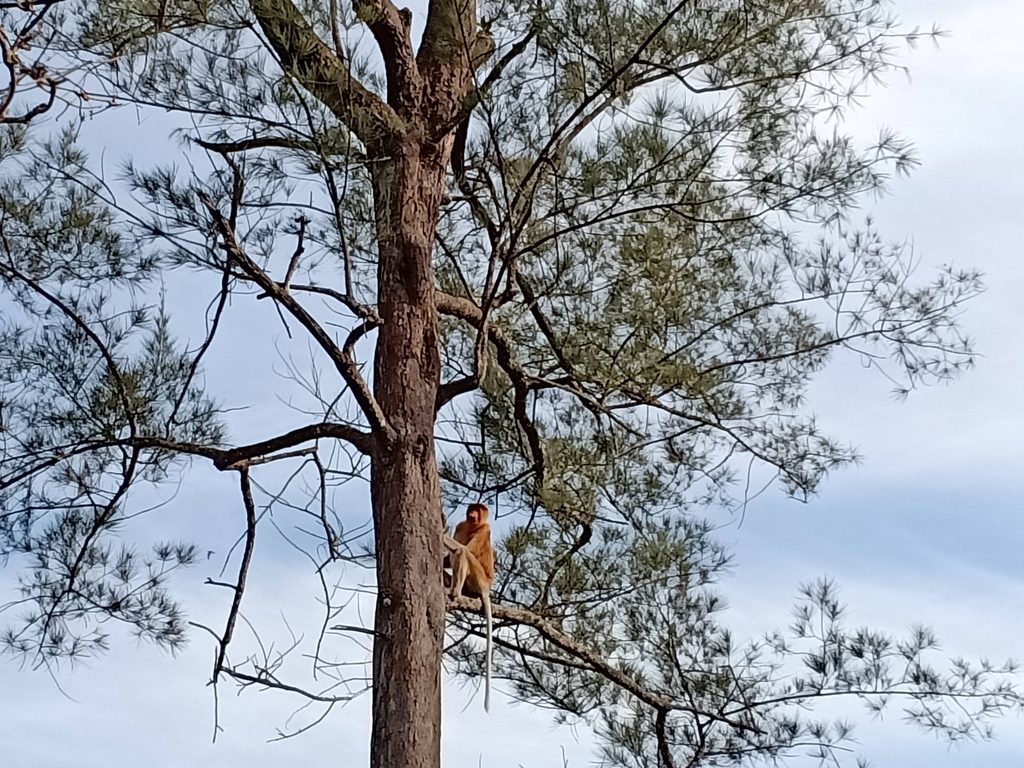
These monkeys are always a delight to watch. They’re known for their orange body, big pendulous noses, and “beer” bellies.
I always enjoy talking about proboscis monkeys. Whenever a foreigner brought up proboscis monkeys in a discussion, I would always tell them the “Dutch Monkey” tale – about how the monkey got its name. They always nodded in agreement and laughed every time.
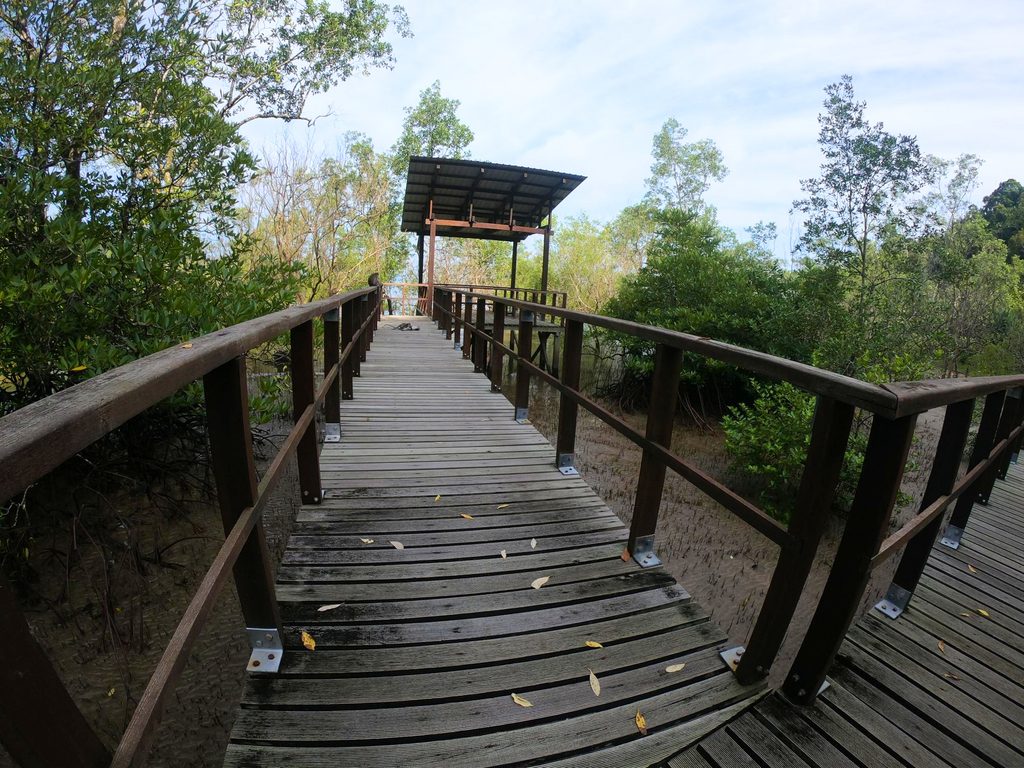
If you would like to see proboscis monkeys, then you’ll have to come to Borneo. It’s the only place where you’ll find them. There are about 150 proboscis monkeys at Bako National Park. Most of them like to hang around Telok Delima and Telok Paku in the early morning or before dusk. I was fortunate enough to see them near the park’s headquarters. I could see them much more clearly there.
At Telok Assam, near the boat jetty, I saw silvered-leaf langurs. I encountered them in the late afternoon. They were running around the mangrove area. I also saw long-tailed macaques playing near the mangrove area. They were just minding their own business.
Bornean Bearded Pigs Often Roam Around Beach Forest
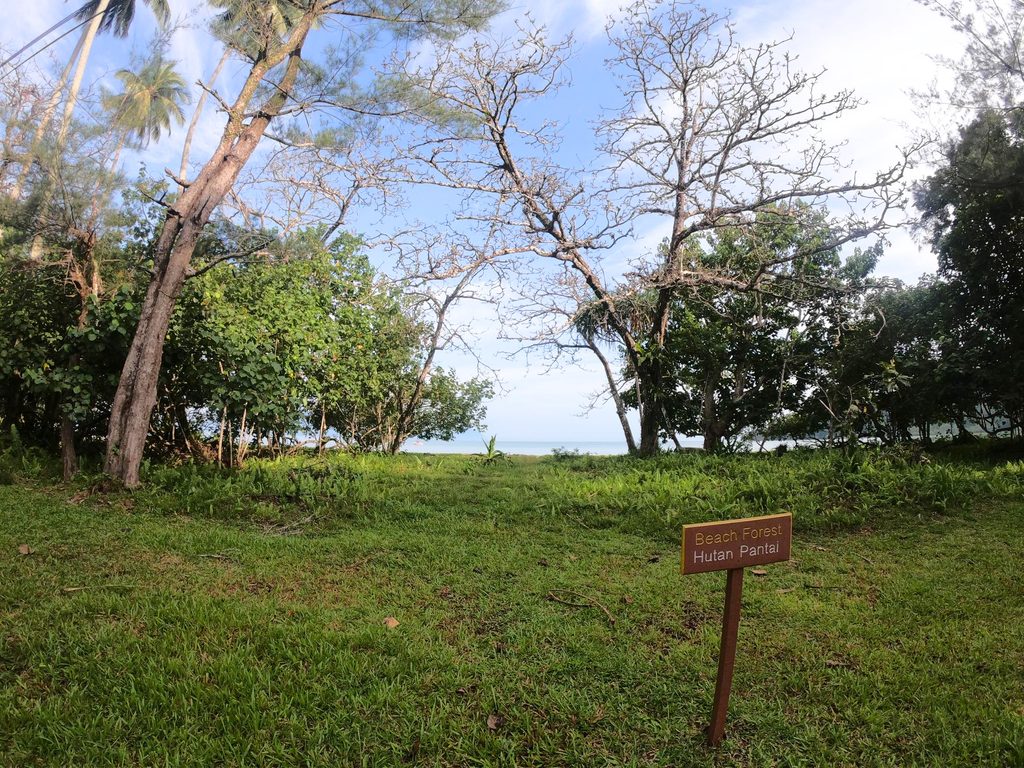
Near the park’s headquarters, you may encounter Bornean Bearded Pigs. You can easily spot them by their beard. The last time I saw them was at Beach Forest and just outside the chalets. They were not afraid of people. Still, I kept my distance.
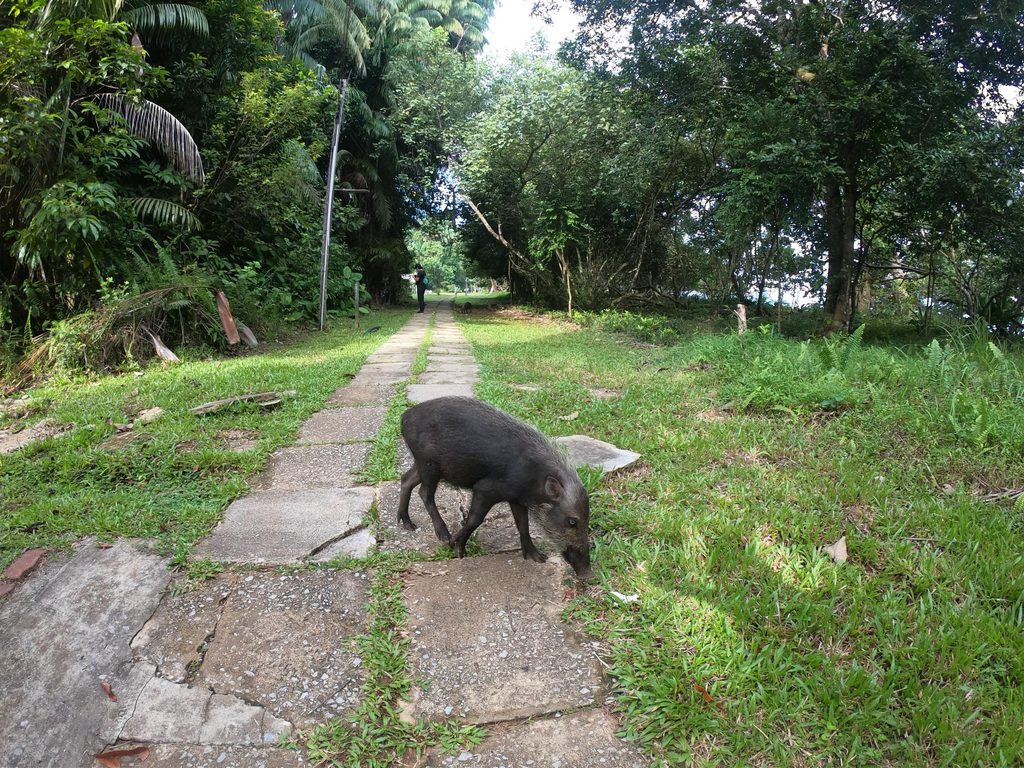
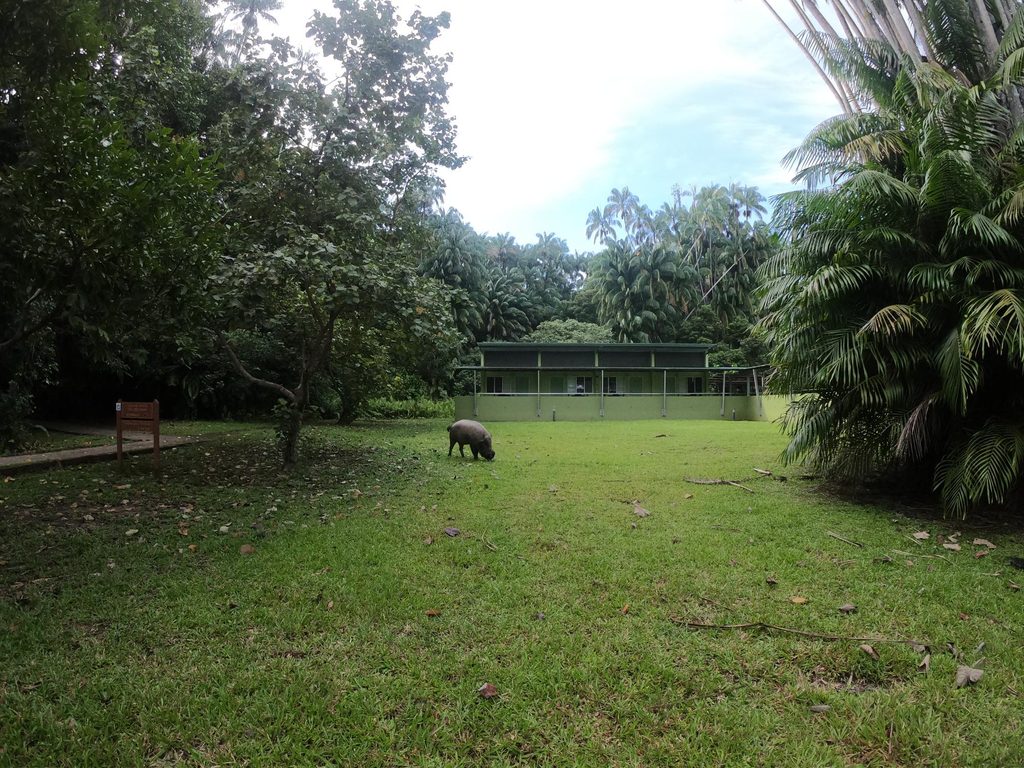
These bearded pigs are protected here, so they seem pretty happy. In the wild elsewhere, they are often hunted for their meat. They often ended up on the fire as ‘sinalau bakas’, which means smoked wild boar meat. But even in the national park, they may face danger from predators like the reticulated python.
Reticulated pythons are the world’s longest snake and rank third after green anacondas and Burmese pythons in weight. You can find them in lush jungles, swamps, and mangrove areas. They’re mostly active at night and can be seen perching on low branches. Consider getting a guide to help you spot them in action.
You May Encounter Old Trees, Crawling Plants, Orchids, and Wild Mushrooms
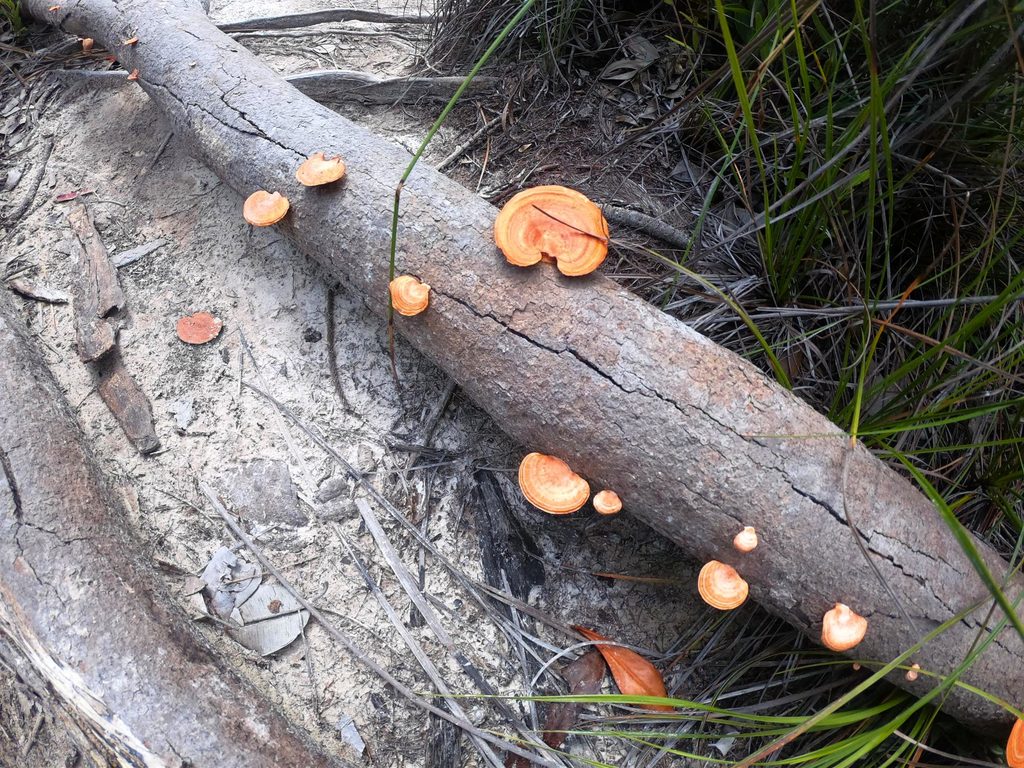
There are many kinds of plants and vegetation at Bako National Park. I have come across large and tall trees (which looked pretty old), crawling plants, orchids, and wild mushrooms. If you see wild mushrooms, don’t just pick them up and eat them; they could be poisonous, especially when they’re strikingly bright.
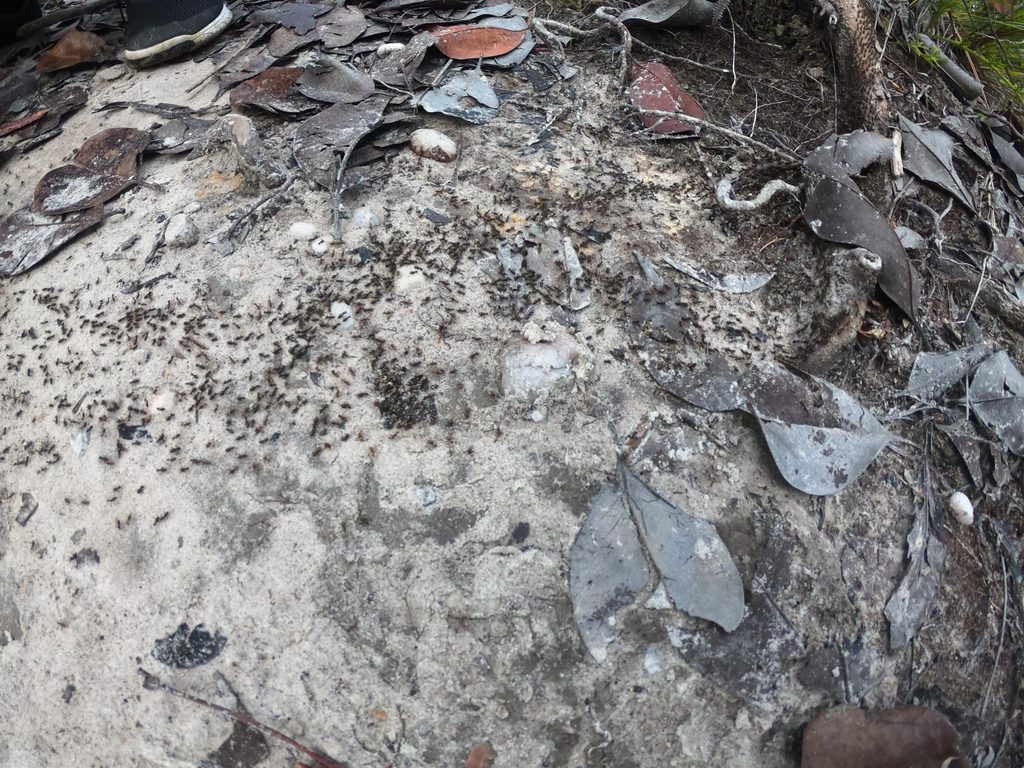
The park features 25 types of vegetation that form seven ecosystems. Below are the seven ecosystems:
- Beach vegetation
- Cliff vegetation
- Kerangas or Heath Forest
- Mangrove Forest
- Peat Swamp Forest
- Mixed Dipterocarp Forest
- Padang or Grasslands Vegetation
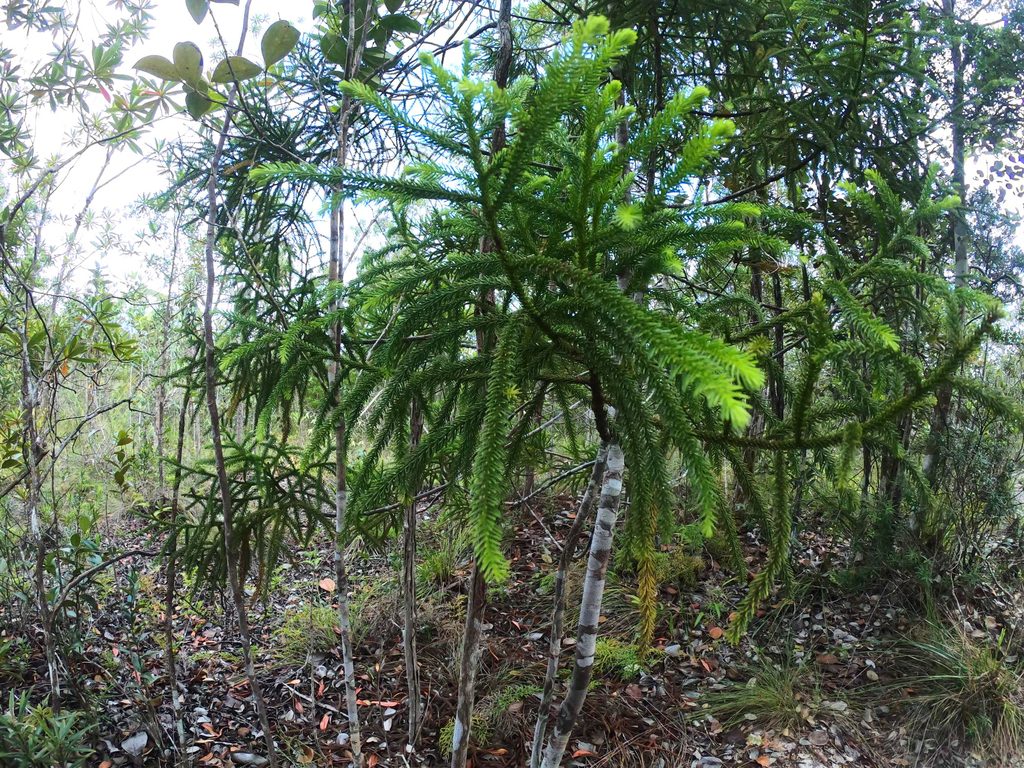
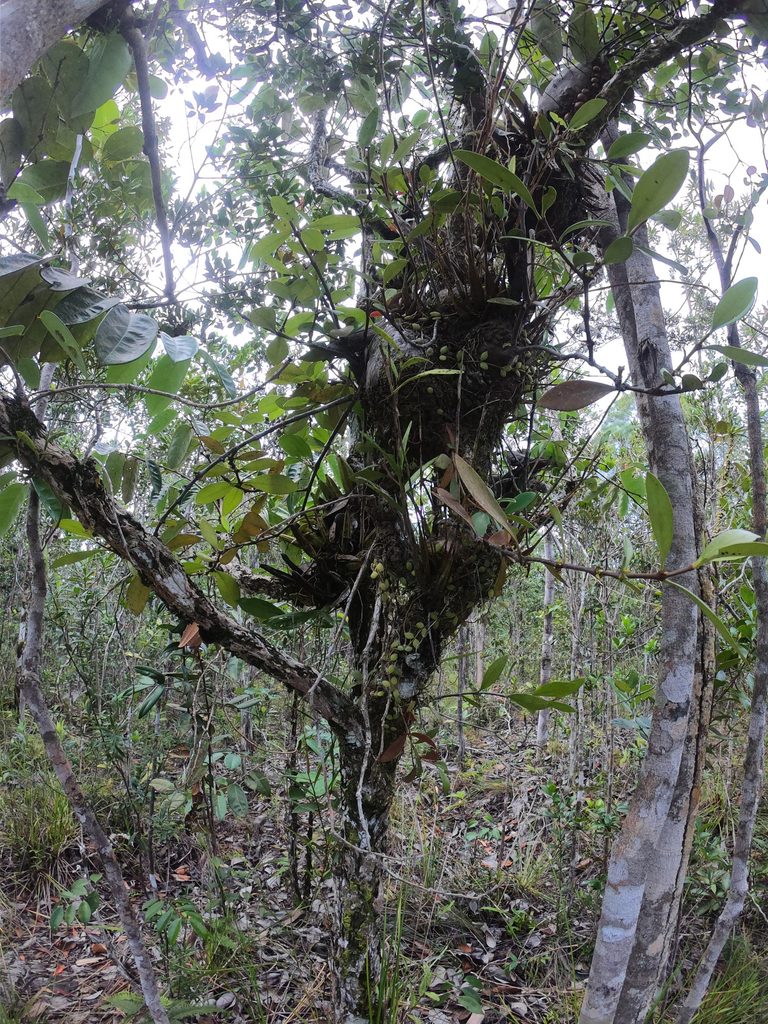
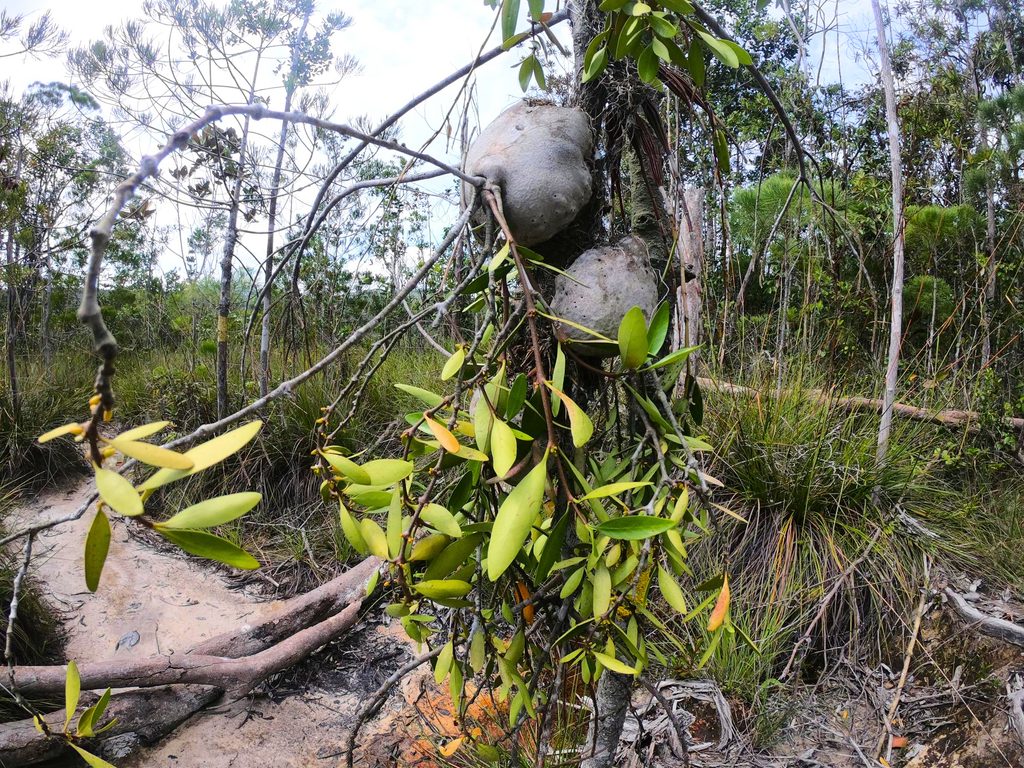
Since these vegetation types are so distinct, you can easily notice their differences. Many can be found at Telok Assam, so keep your eyes peeled.
Take Pictures on the Sandstone Plateau (It Reminds Me of the Moon!)
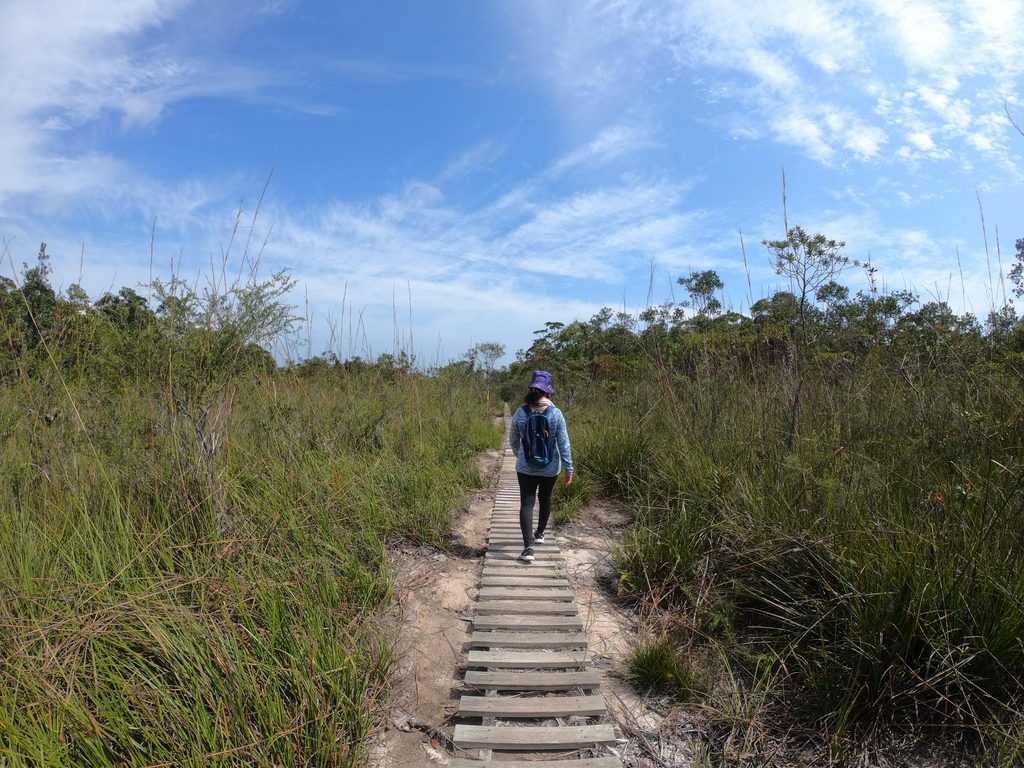
Now, it’s not like I’ve been to the moon. But I know what a moon surface looks like. And the sandstone plateau at Bako National Park reminds me of the moon. I’m pretty sure there were others who might have had the same thought. The black rocky surface also reminded me of a brain. How quirky. I especially loved this part of the trek. The trail leads to Telok Pandan Kecil.
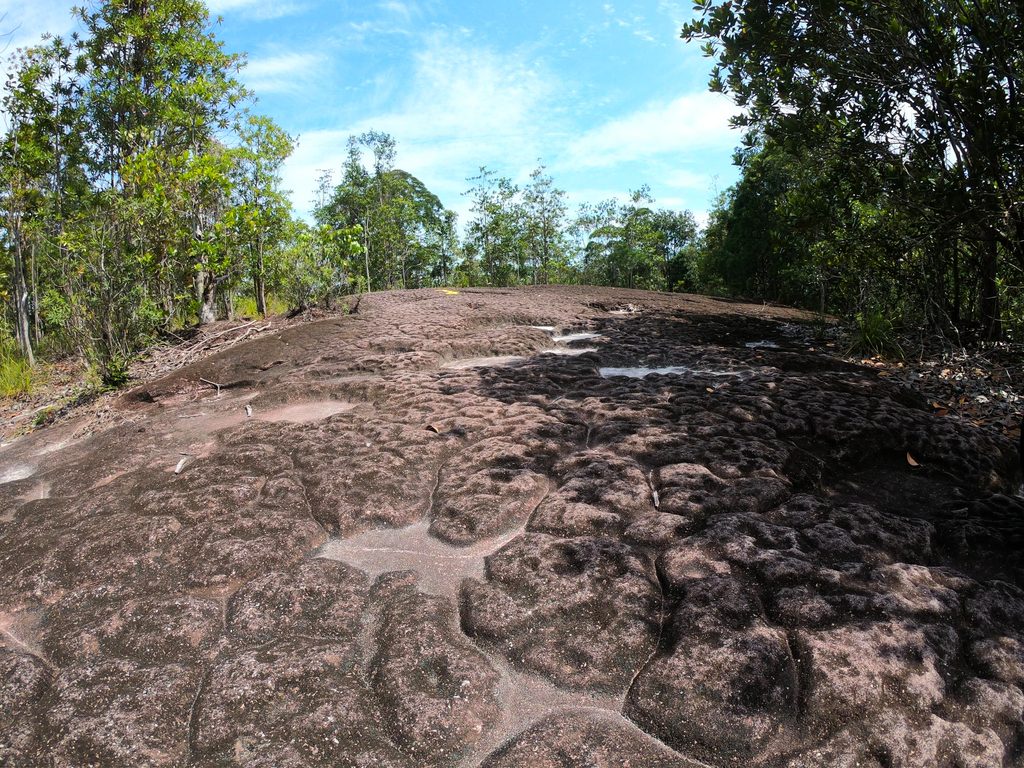
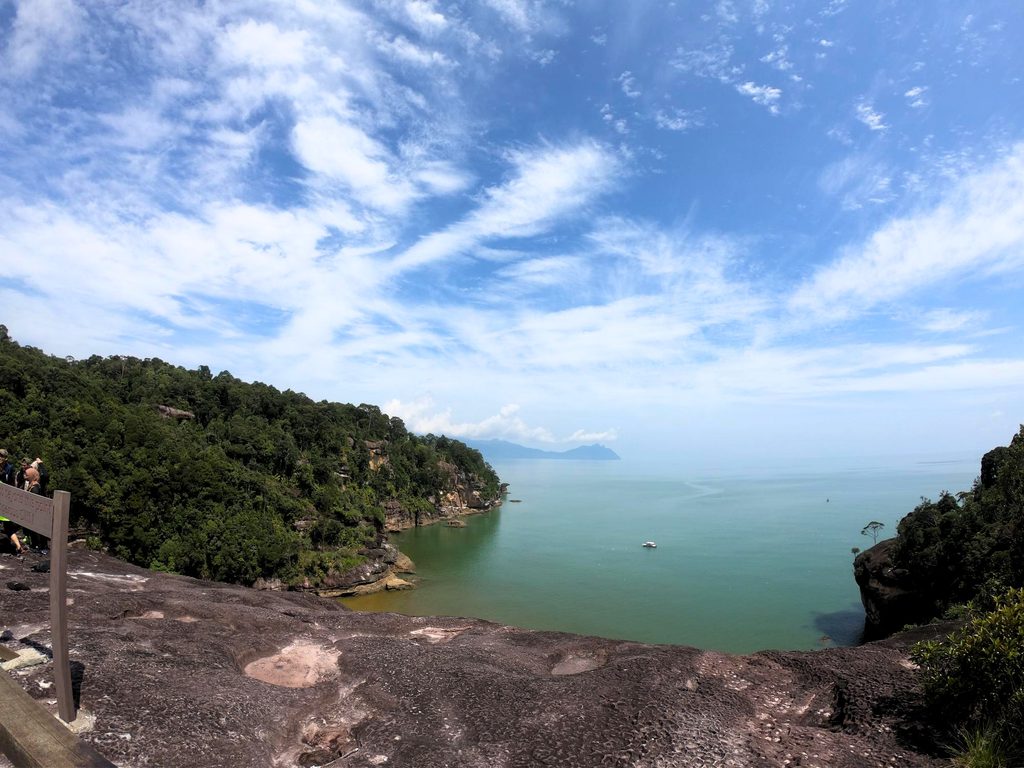
Before I arrived at the sandstone plateau, I encountered some water pools – all in different sizes. I thought they were really pretty. There was some rain when I visited.
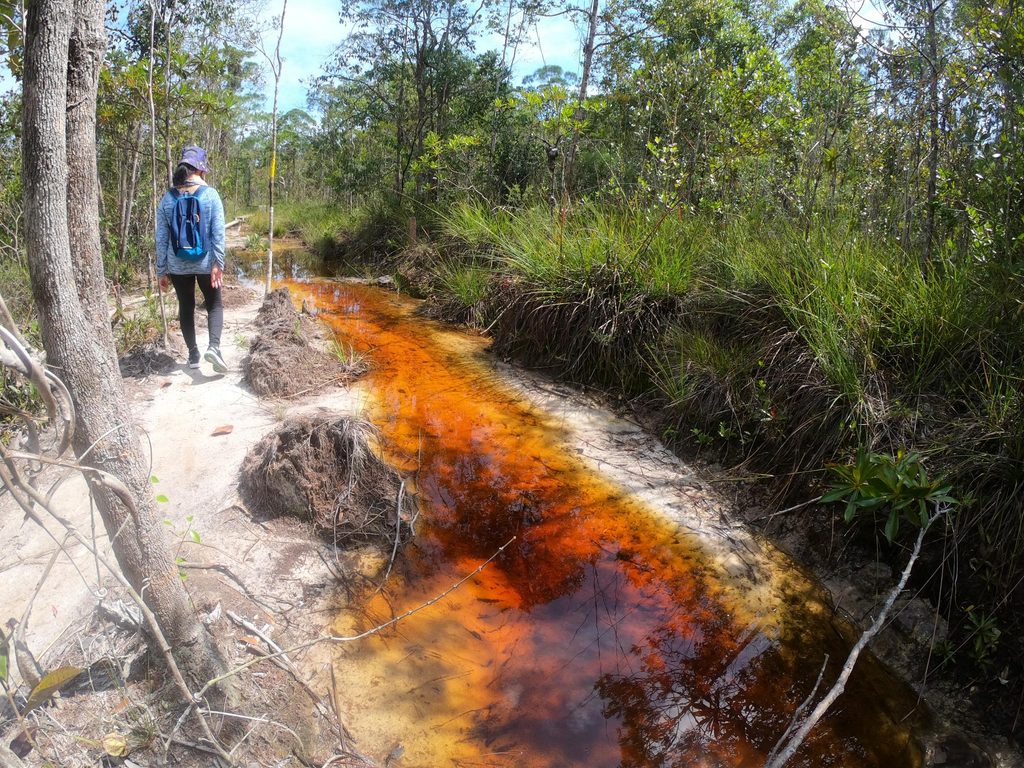
Depart From Telok Pandan Kecil
After my trek, I took a boat from Telok Pandan Kecil to get back to Kampung Bako Jetty. Of course, this is an option. Alternatively, visitors can depart elsewhere, for example, from Telok Assam (where I initially arrived).
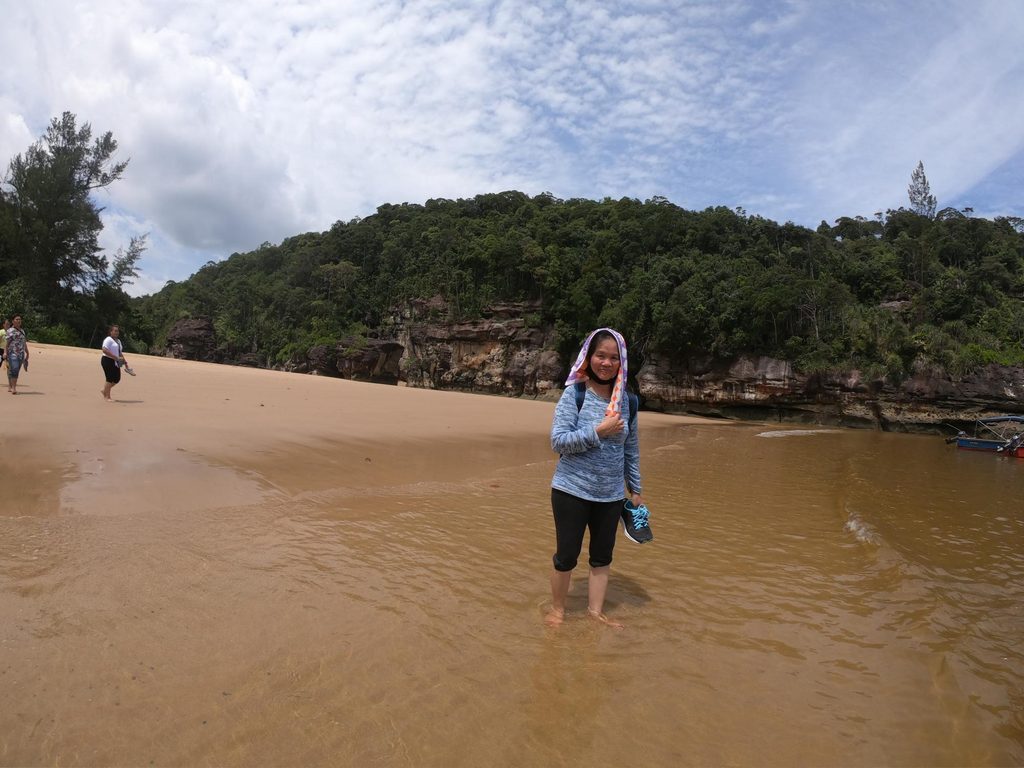
There were several boats waiting at Telok Pandan Kecil. We had to wait a little until the boat had enough passengers.
What was nice about departing from Telok Pandan Kecil was that I could see the infamous Cobra Head Sea Stack, a rock formation that resembled the head of a snake. I didn’t get to see it during my first visit.
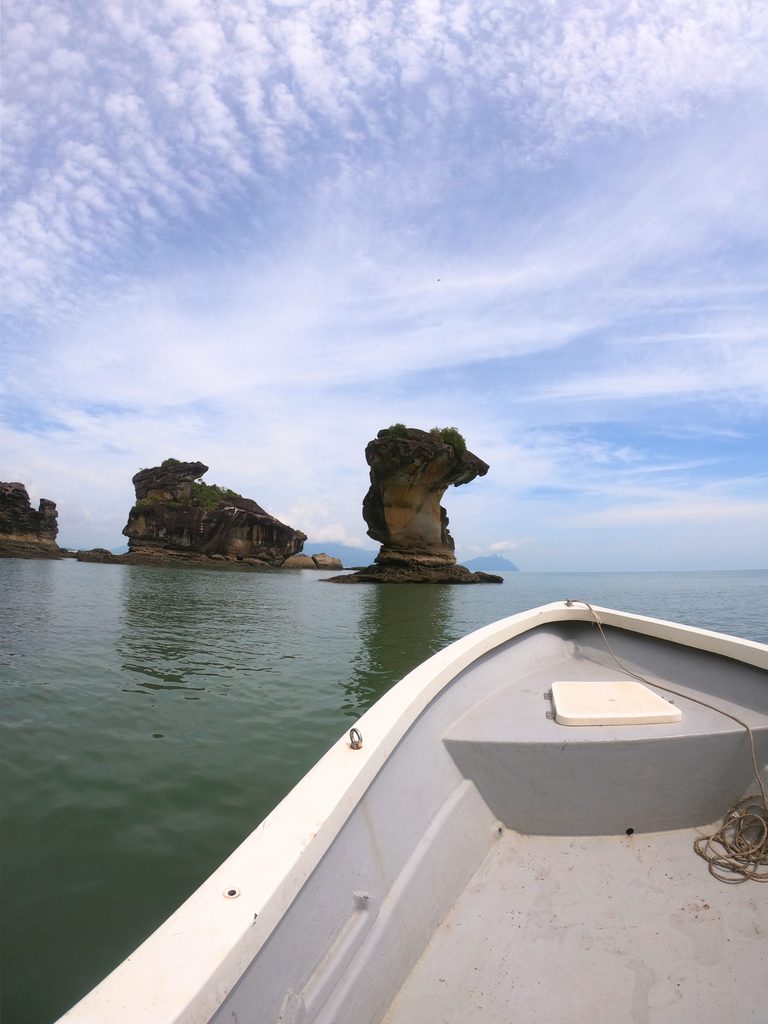
The Cobra Head Sea Stack had always been the face of Bako National Park. Unfortunately, it collapsed in February 2024. The collapse happened due to long-term erosion. Plus, the strong waves and unforgiving weather conditions contributed to its deteriorating state. Nevertheless, life moves on, and people will continue to visit the national park.
Final Thoughts
Bako National Park is one of Sarawak’s greatest gems. Even though its infamous Cobra Head Sea Stack has collapsed, the national park will continue to attract domestic and international visitors. Bako National Park has other perks, too.
Bako National Park is where you can explore one of the world’s oldest rainforests. It’s also home to various animal species, including the big-bellied proboscis monkeys! Bako National Park is also the easiest place to see bearded pigs. If you haven’t been to Bako National Park, I suggest you start planning your trip.


